In short
- Capital: Yaoundé · largest city: Douala · area: ≈ 475,000 km².
- Population: roughly 29–30 million (UN estimates, mid-2020s); more than 250 ethnic groups.
- Languages: French and English official; Pidgin, Camfranglais and 250+ local languages.
- Religion: mainly Christian in the south, Muslim in the north, with traditional beliefs alongside both.
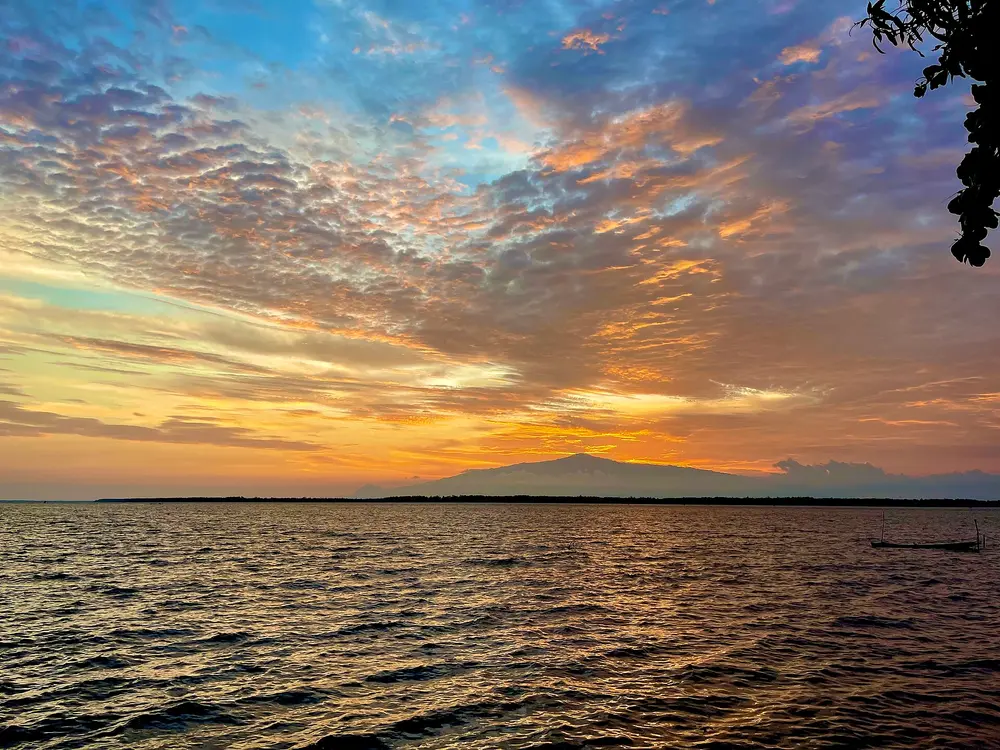
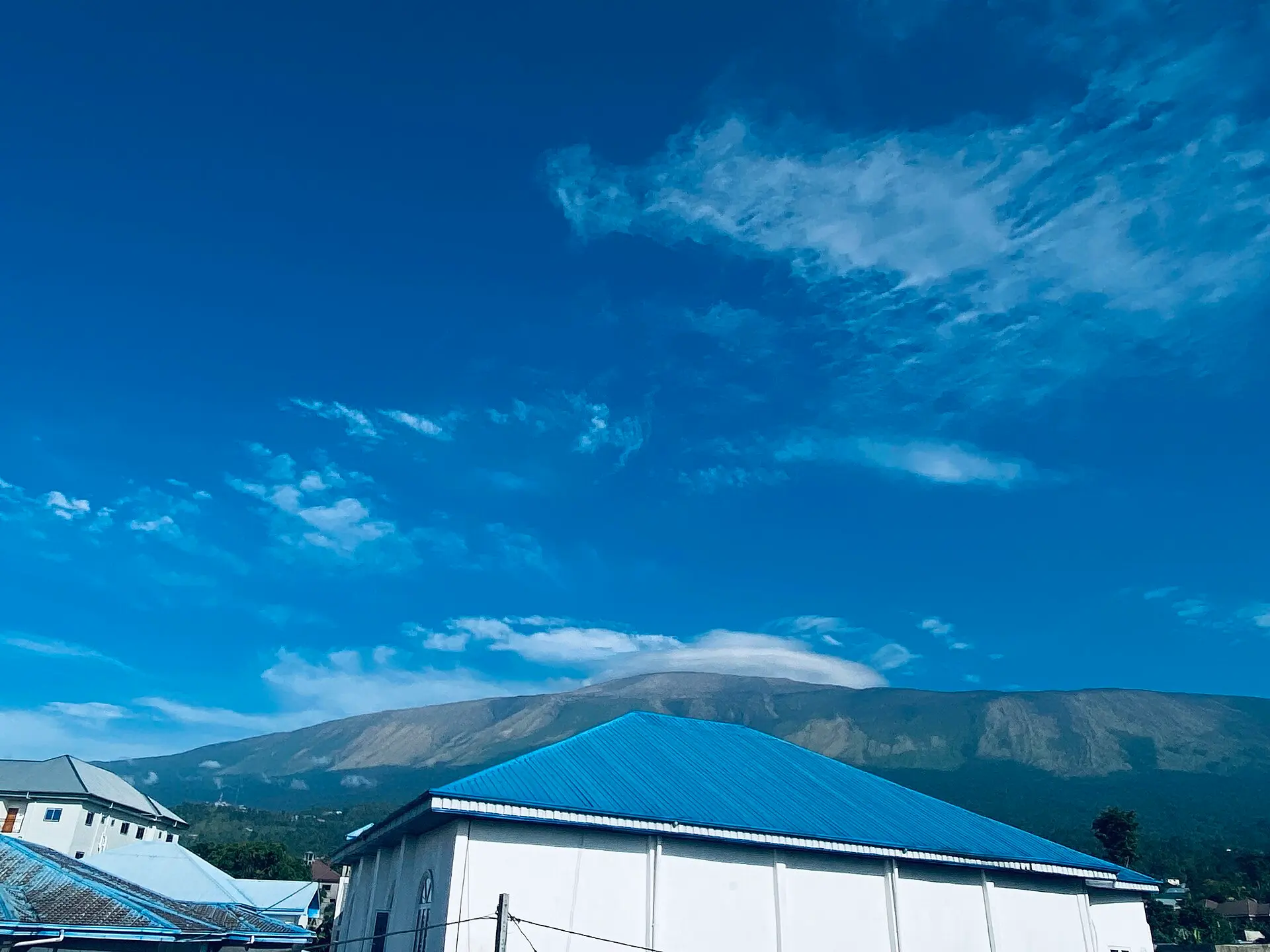
- Highest point: Mount Cameroon, an active volcano of about 4,040 m.
Africa in miniature
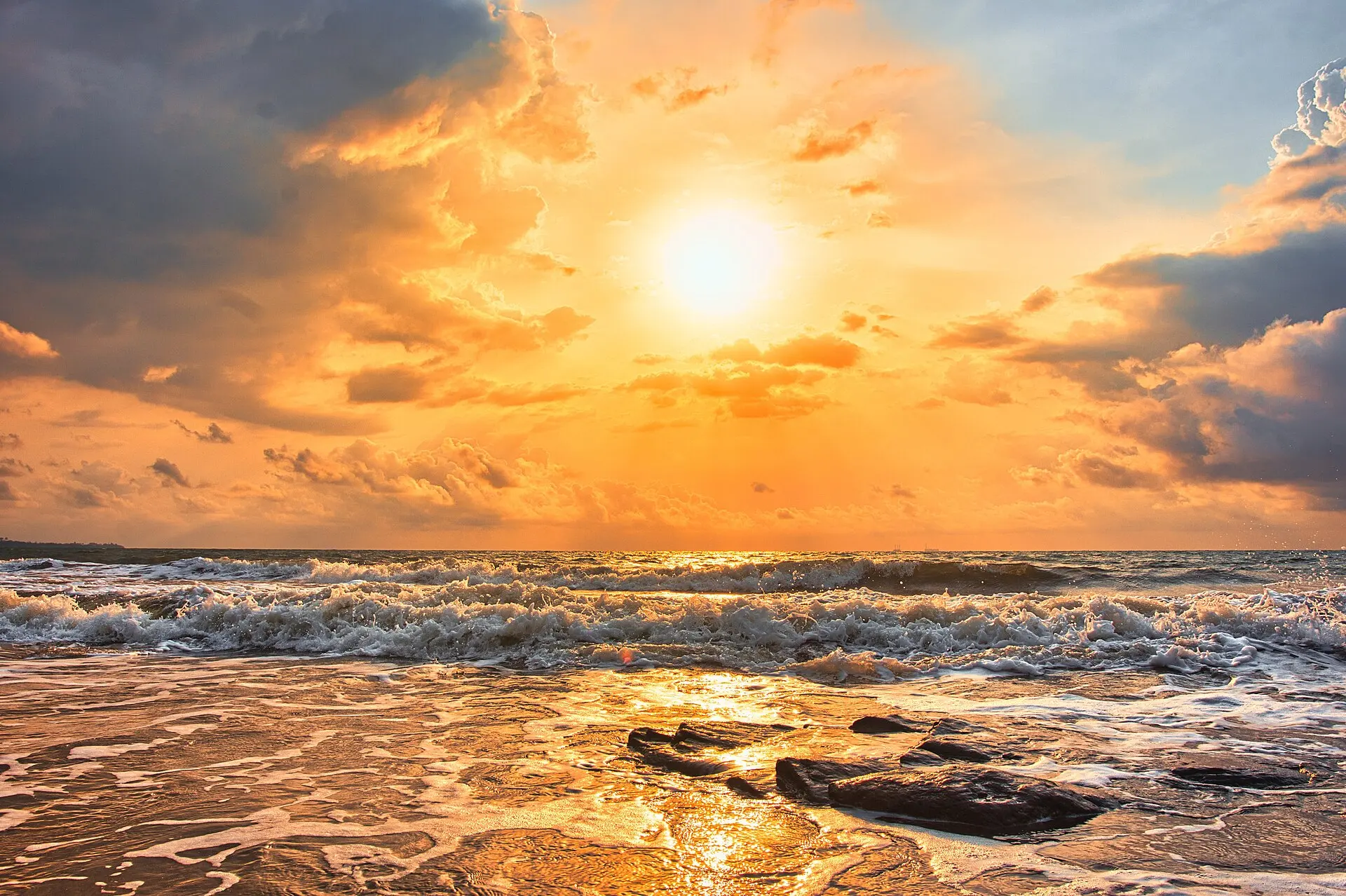
Cameroon's nickname is earned. Within one country you find the mangroves and black-sand beaches of the Gulf of Guinea, the equatorial rainforest of the Congo Basin, volcanic highlands with crater lakes, the grassy Adamawa plateau and the Sahelian plains around Lake Chad. The Cameroon Volcanic Line runs from the island of Bioko through Mount Cameroon to the Western Highlands and the Mandara Mountains, creating fertile soils and dramatic landscapes.
Biodiversity is among the richest in Africa: forest elephants, western lowland gorillas, chimpanzees, drills and mandrills in the south; giraffes, elephants and antelopes historically in the northern savannahs; over 900 bird species and many endemic plants and amphibians in the highlands.
Ten regions
| Region | Capital | Language of daily life | Travel note (Nov 2026) |
|---|---|---|---|
| Littoral | Douala | French | Open |
| Centre | Yaoundé | French | Open |
| South | Ebolowa (Kribi, Campo) | French | Open |
| East | Bertoua (Dja, Lobéké) | French | CAR border strip: do not travel |
| West | Bafoussam (Dschang, Foumban) | French | Open; check border areas |
| Adamawa | Ngaoundéré | French, Fulfulde | Border areas restricted |
| North | Garoua | French, Fulfulde | UK: essential travel only |
| Far North | Maroua | French, Fulfulde | Do not travel |
| North-West | Bamenda | English, Pidgin | Do not travel |
| South-West | Buea (Limbe) | English, Pidgin | Do not travel (Limbe: UK essential travel only) |
People and languages
Cameroon is home to more than 250 ethnic groups and roughly as many languages, from Bantu languages in the south (Duala, Ewondo, Bulu, Basaa) and the Grassfields languages of the Bamileke and Bamoun, to Chadic and Adamawa languages and Fulfulde in the north, as well as the languages of the Baka and Bagyeli forest peoples. French and English are the official languages; Cameroonian Pidgin English is a lingua franca in the west and in Douala, and urban youth mix French, English and local words in Camfranglais.
Religion follows geography in broad strokes: Christianity (Catholic and Protestant) predominates in the south and west, Islam in the north, and traditional beliefs and institutions — chiefdoms, secret societies, ancestor veneration — remain important everywhere.
Kingdoms and traditional authority
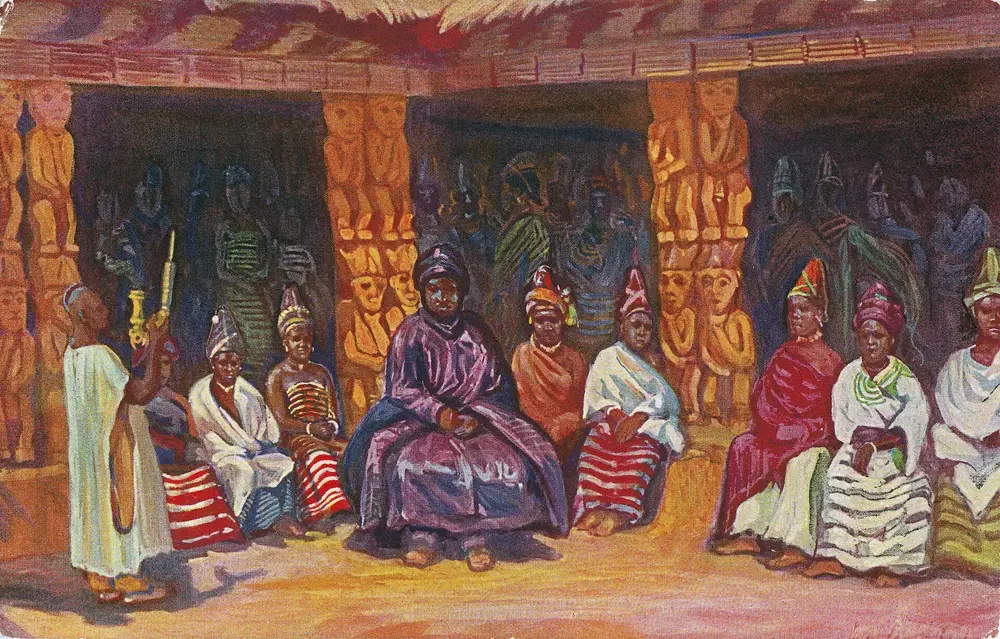
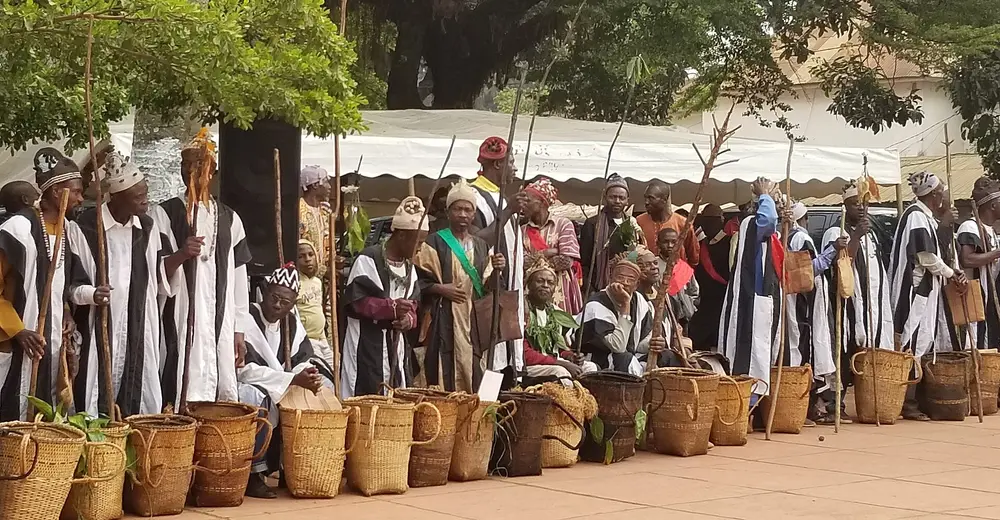
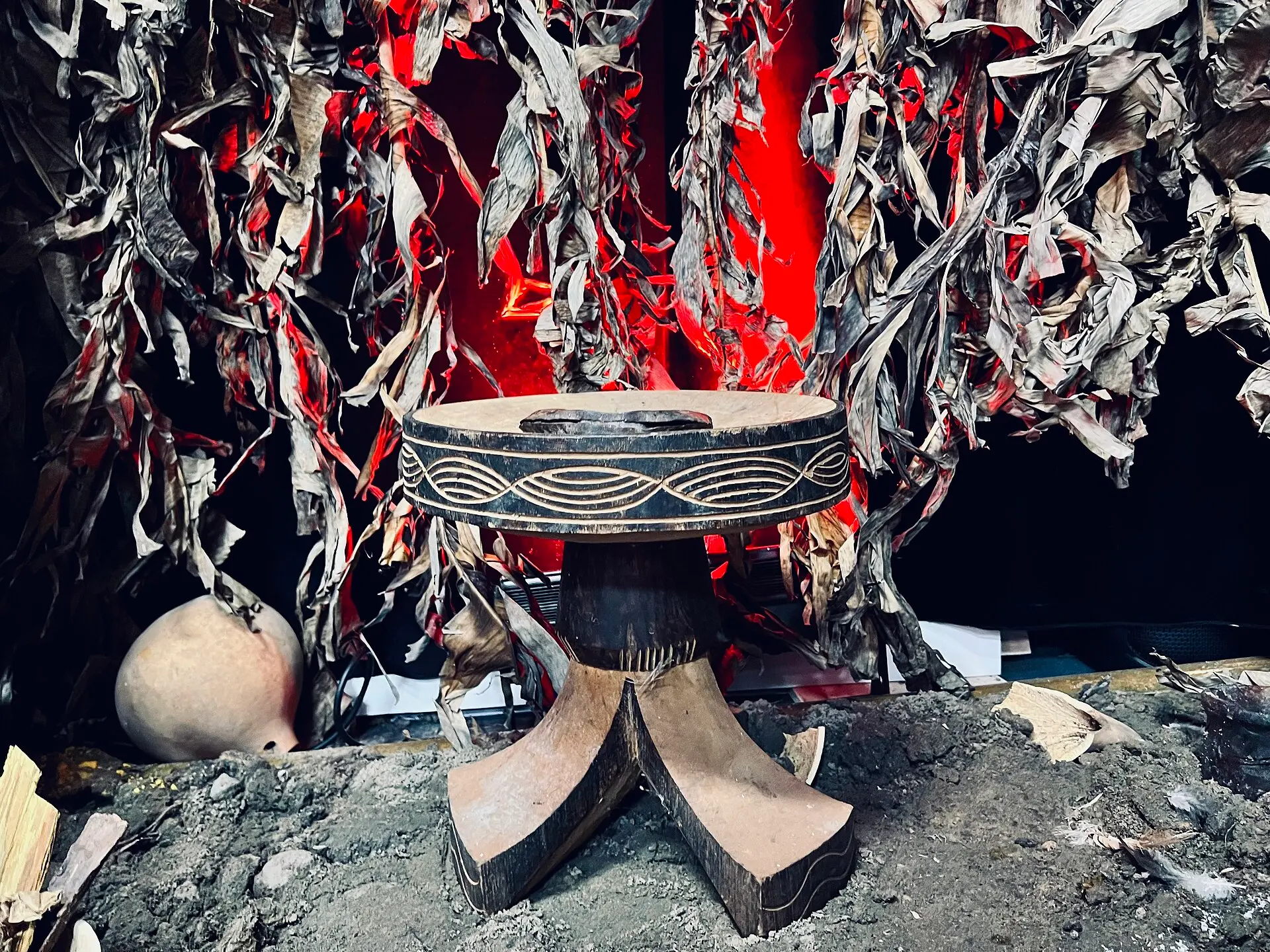
One of the most striking things for visitors is the vitality of traditional rulers. Alongside the modern state, sultans, lamibe (Fulani lords), fons and chiefs exercise moral and customary authority, preside over festivals and maintain palaces that are also museums. The Bamoun sultanate in Foumban and Bamileke chiefdoms such as Bandjoun, Bafoussam, Batoufam and Bangangté are open to respectful visitors.
Music, football and everyday culture
Cameroon's music is a national passion: makossa, born in Douala and carried to the world by Manu Dibango; bikutsi, the driving rhythm of the Beti around Yaoundé; and today's Afropop and urban stars. Football is a near-religion — the Indomitable Lions famously reached the World Cup quarter-finals in 1990 and have won the Africa Cup of Nations five times.
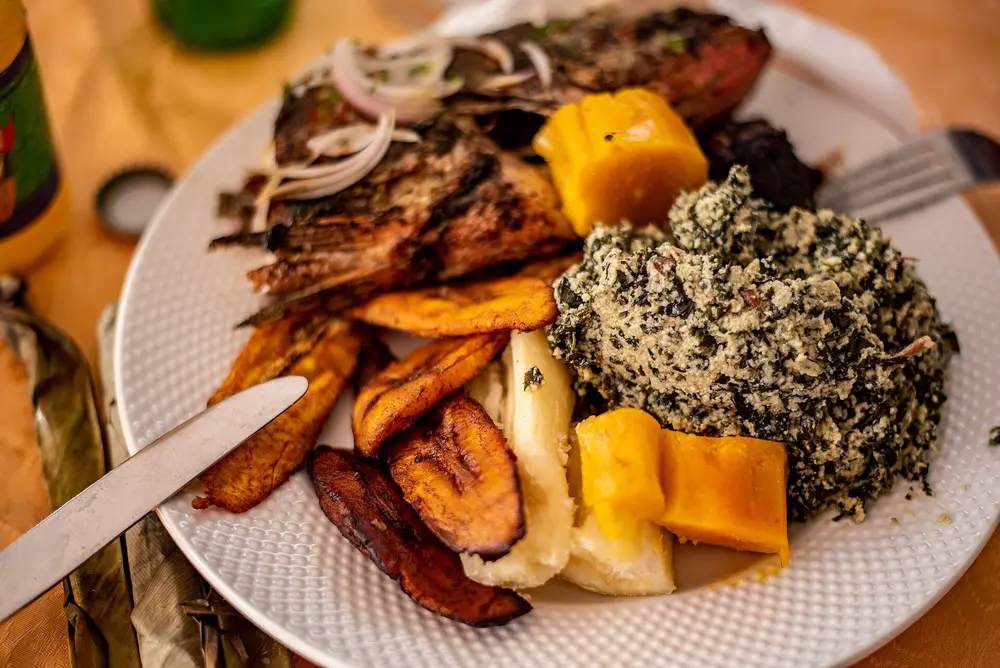
Food is a point of pride, with regional dishes like ndolé, achu, eru and koki; see our food guide.
Football in Cameroonian life
Few things unite the country like the Indomitable Lions. Their run to the 1990 World Cup quarter-finals — the first by an African team — made Roger Milla a global name; the team won Olympic gold in Sydney in 2000 and five Africa Cup of Nations titles (1984, 1988, 2000, 2002 and 2017), and Cameroon hosted the Africa Cup of Nations in 2022. On match days, bars fill and cities stop: watching a game with locals is one of the easiest ways to join in.
Key facts
- Official name
- Republic of Cameroon / République du Cameroun
- Capital
- Yaoundé
- Currency
- Central African CFA franc (XAF), 655.957 per euro
- Time zone
- UTC+1 (West Africa Time), no daylight saving
- Calling code
- +237
- Electricity
- 220 V, plug types C and E
- Drives on
- the right
- Independence
- 1 January 1960 (French Cameroun); reunification 1 October 1961
Useful phrases
French is the most useful language in most regions. A few phrases: Bonjour (hello), Merci (thank you), S'il vous plaît (please), C'est combien ? (how much?), Je voudrais aller à… (I'd like to go to…). In Pidgin English (Douala, the West, the Anglophone regions): How na? (how are you?), I dey fine (I'm fine), How much? Greeting someone in their own language — ask your guide — is always appreciated.
Languages in practice
For travellers, Cameroon is a French-speaking country with English pockets. In Douala, Yaoundé, Kribi, Foumban and the West, French is the language of hotels, taxis, markets and officials; English is widely spoken only in the North-West and South-West (both under restrictive travel advice) and by educated Cameroonians generally, who are often bilingual. Pidgin English works with many people in Douala and the West. Most museum guides at major sites can manage some English, but drivers and market traders mostly speak French — a phrasebook or translation app helps, and so does learning a few greetings.
- Bonjour / Bonsoir — hello / good evening (always greet before asking anything).
- Ça va ? — how are you? (the reply: Ça va bien, merci).
- On dit quoi ? — Camfranglais for 'what's up?', guaranteed to get a smile.
- Je ne parle pas bien français — I don't speak French well.
- L'addition, s'il vous plaît — the bill, please.
- Pas de piment, s'il vous plaît — no chilli, please.
Etiquette in a nutshell
- Greet everyone — shopkeepers, drivers, officials — before getting to business, and shake hands; use the right hand to give and receive.
- Respect age and rank: elders, chiefs and officials are addressed formally.
- Dress neatly; Cameroonians take pride in appearance, and modest clothing is expected at religious sites, chiefdoms and in the Muslim north.
- Ask before photographing people, and never photograph government buildings, soldiers, police, airports or bridges.
- Accept hospitality graciously; if invited to a home, a small gift of drinks or food is appreciated.
- Public displays of affection are uncommon; same-sex relations are illegal and LGBT+ travellers should be discreet (FCDO).
Geography in more detail
Cameroon borders Nigeria to the west, Chad to the north-east, the Central African Republic to the east, and the Republic of the Congo, Gabon and Equatorial Guinea to the south, with about 400 km of Atlantic coastline on the Gulf of Guinea. Its great rivers — the Sanaga, the longest, the Wouri at Douala, the Nyong, the Ntem — flow to the Atlantic; in the north, rivers drain to Lake Chad or, via the Bénoué, to the Niger.
The Cameroon Volcanic Line gives the country its most dramatic landforms: Mount Cameroon (≈ 4,040 m) on the coast, Mount Manengouba and its twin crater lakes, the Bamboutos and Oku massifs of the highlands, and the volcanic plugs of the Mandara Mountains. In 1986, a sudden release of carbon dioxide from Lake Nyos in the North-West killed some 1,700 people — a rare volcanic-lake disaster that led to degassing works on the lake.
Economy and everyday life
Most Cameroonians work in agriculture, trade and services. Cocoa, coffee, cotton, bananas, rubber and timber are major exports along with oil and gas; Douala's port and the newer deep-sea port at Kribi serve landlocked Chad and the Central African Republic too. Daily life is shaped by markets, mobile money, shared taxis and moto-taxis, churches and mosques, football and music. Family ties are strong, and many urban families keep close links with their home villages, to which they return for funerals and festivals.
Frequently asked questions
Why is Cameroon called Africa in miniature?
Because it contains almost every African landscape — beaches, rainforest, volcanoes, highlands, savannah and Sahel — and a huge diversity of peoples and languages.
What language is spoken in Cameroon?
French and English are official; French dominates in eight regions and English in the North-West and South-West. More than 250 local languages are spoken.
What is the capital of Cameroon?
Yaoundé is the capital; Douala is the largest city and main port.
Is Cameroon in West or Central Africa?
Cameroon is usually counted as part of Central Africa (it belongs to the CEMAC and ECCAS communities), though it borders Nigeria and shares many cultural links with West Africa.
What is Cameroon famous for?
Its diversity ('Africa in miniature'), Mount Cameroon, its football team the Indomitable Lions, makossa and bikutsi music, ndolé, and the kingdoms of the West such as the Bamoun sultanate.
What is the population of Cameroon?
Roughly 29–30 million people (estimates as of 2026), with Douala and Yaoundé the largest cities.
Is Cameroon French- or English-speaking?
Both are official, but French is the everyday language in eight of the ten regions; English dominates in the North-West and South-West.
Sources and official information
Facts were checked against these official and primary sources in November 2026. Security advice, visa rules, prices and timetables change, so confirm before you go.
VisitCameroon.com is an independent guide, not the official site of the Ministry of Tourism and Leisure (MINTOUL), the Government of Cameroon or any operator. Some links are affiliate links: hotels go to Booking.com and tours to GetYourGuide, and we may earn a commission at no extra cost to you.