In short
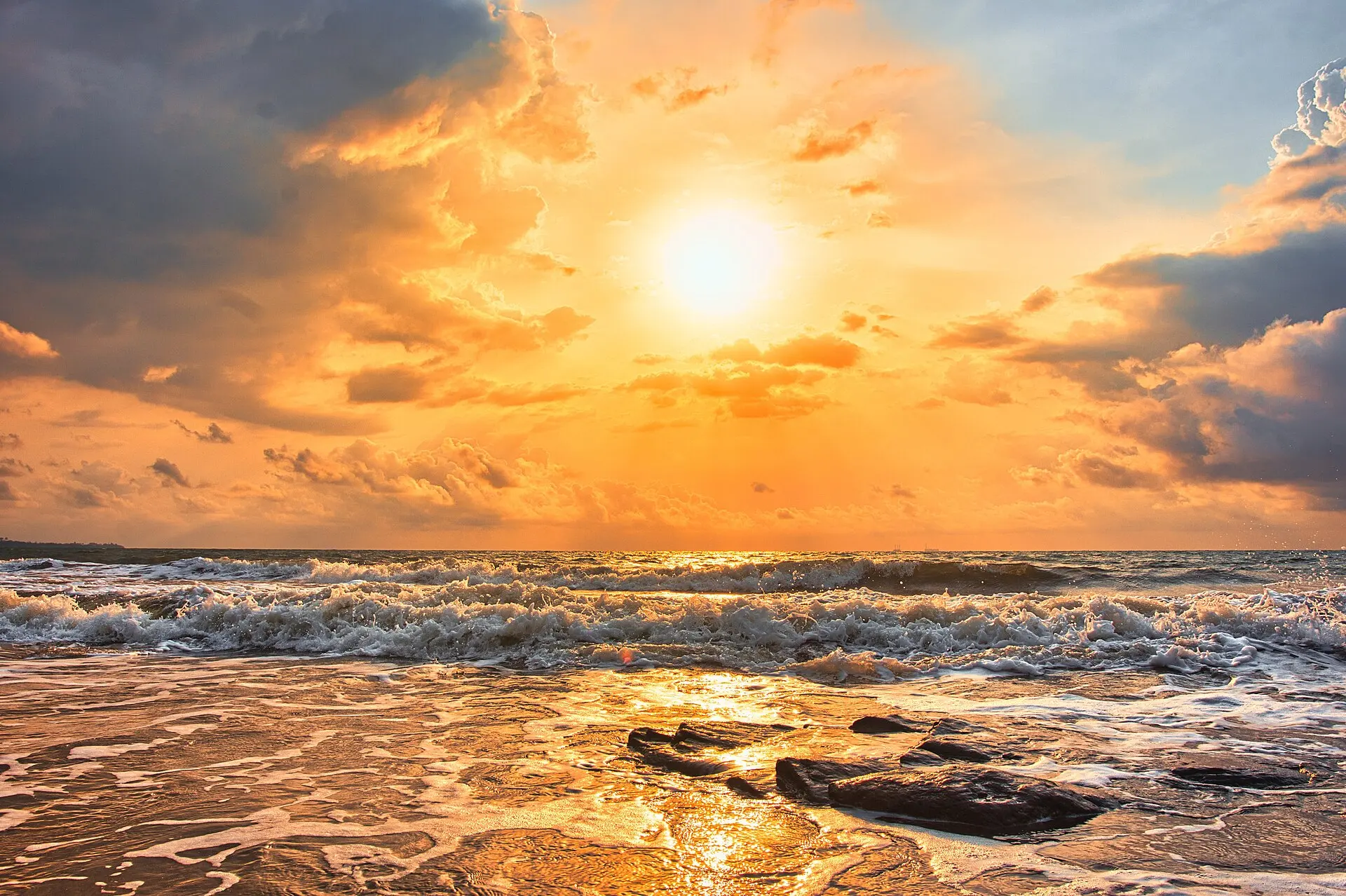
- Best overall: December to February — the long dry season in the south and highlands, with sunshine on the coast and easier roads.
- Douala and Limbe are among Africa's wettest places, with the heaviest rain from June to September.
- Yaoundé and the south-east forests have two rainy seasons (roughly March–June and September–November) and a short dry spell in July–August.
- The north is dry from November to May and hottest in March–May; its rains fall from June to September.
- Temperatures are warm year-round on the coast (about 23–32 °C) and pleasantly mild in the Western Highlands.
Three climates in one country
Cameroon spans about 11 degrees of latitude, from the equatorial Gulf of Guinea to the shores of Lake Chad, and rises from sea level to over 4,000 m on Mount Cameroon. Rather than four seasons, think in dry and rainy seasons — and remember they differ between three broad zones:
- The coast (Douala, Kribi, Limbe, Campo): hot and humid all year, with very heavy rain from roughly June to October. Douala receives several metres of rain a year; near Debundscha on the slopes of Mount Cameroon, rainfall is among the highest on Earth.
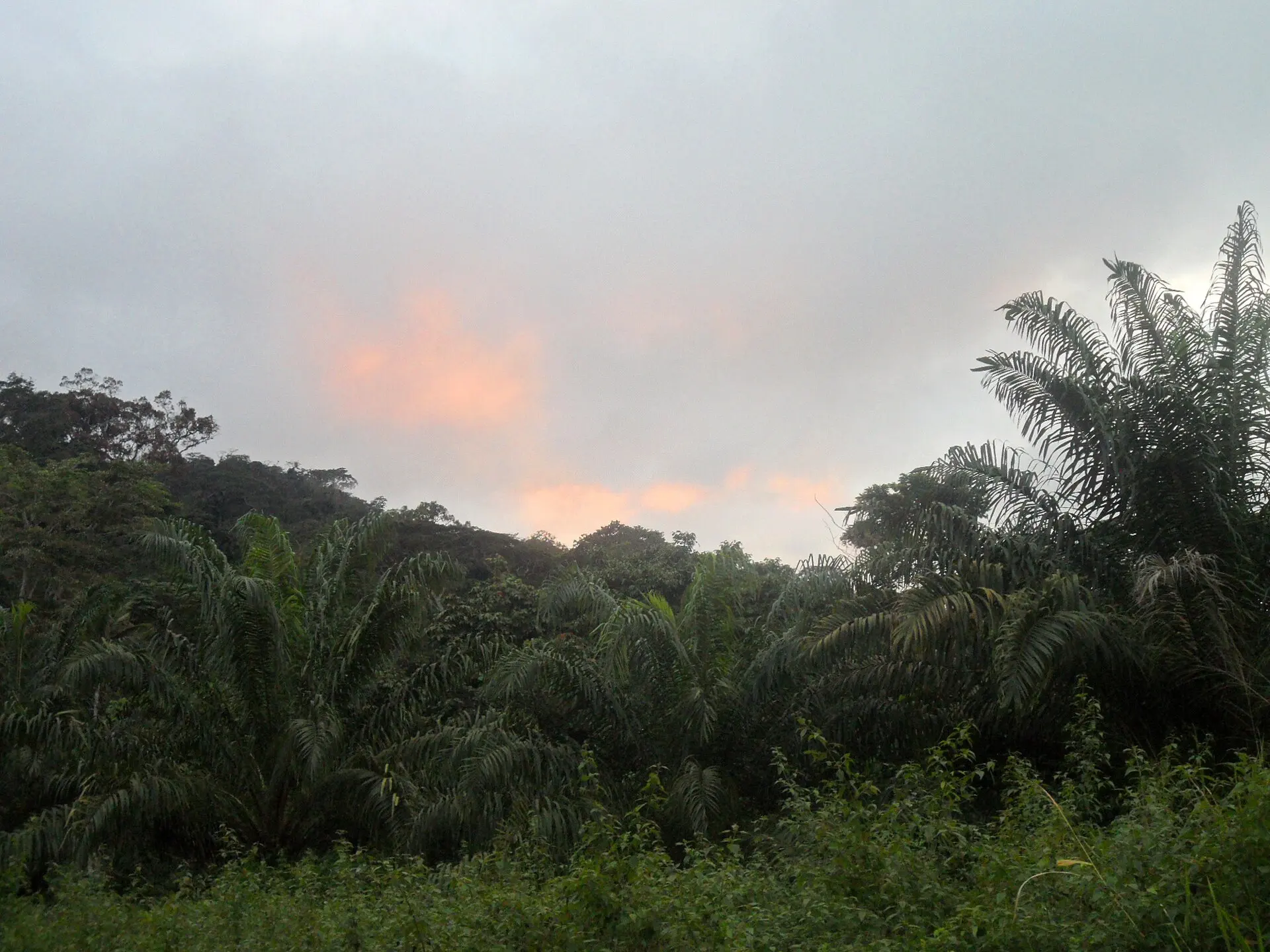
- The centre, south and east plateau (Yaoundé, the Dja, Lobéké): an equatorial pattern with two rainy and two dry seasons, slightly cooler than the coast at 600–800 m.
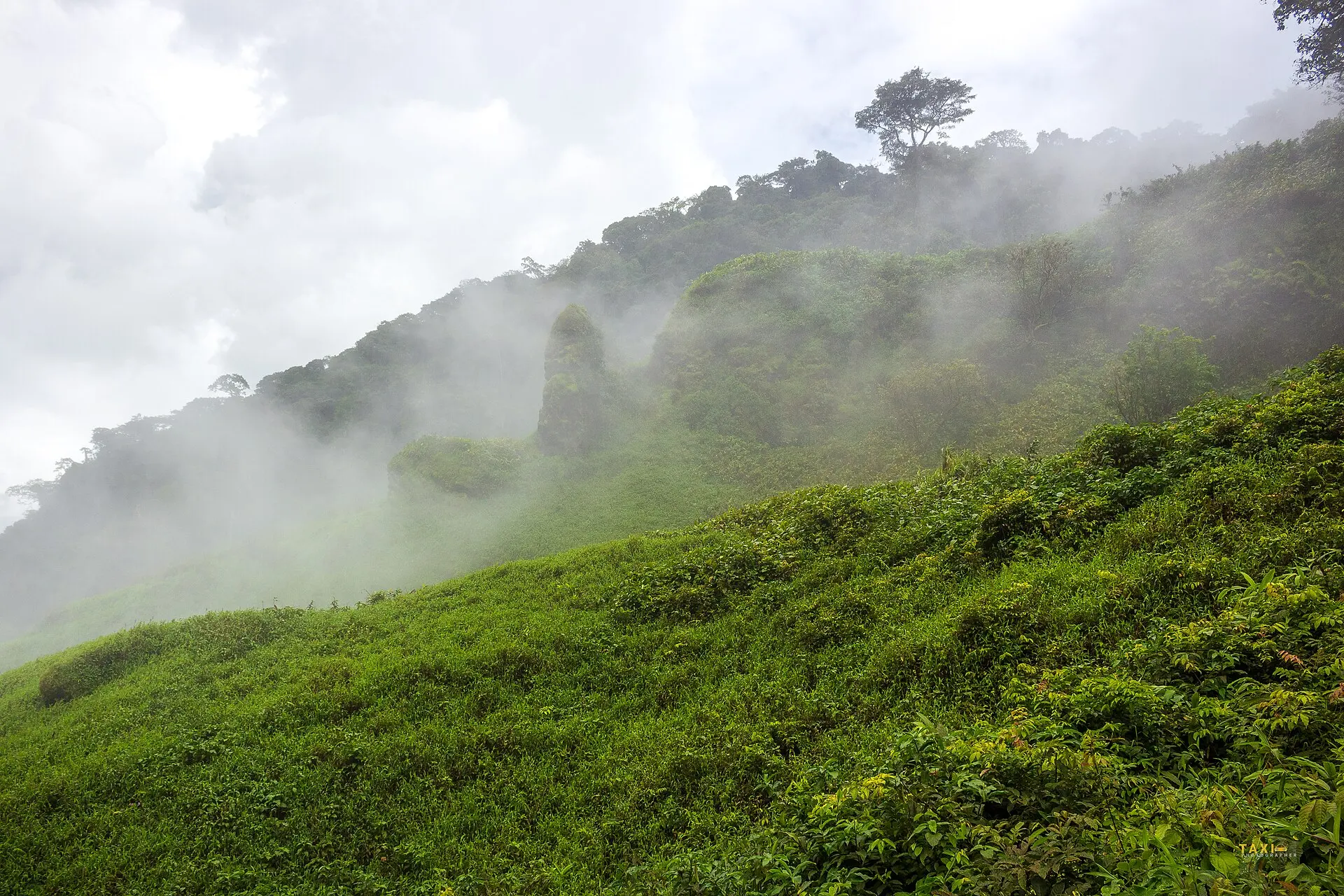
- The Western Highlands (Dschang, Bafoussam, Foumban): mild and green at 1,100–1,600 m, with cool nights; one long rainy season from about March to October.
- The north (Garoua, Maroua): Sahelian, with a single rainy season from June to September and a long hot dry season; harmattan dust from December to February.
Best time at a glance
If you want one answer: December to February is the best time to visit southern Cameroon — dry, sunny and festive, with the sea calm at Kribi, turtles nesting at Ebodjé and the West's chiefdom celebrations in full swing. November and March are good shoulder months. July–August suits Yaoundé and the south. The coast's wettest months, June to September, are best avoided for beach holidays.
Rainy seasons by region
| Region | Rainy season(s) | Driest months | Notes |
|---|---|---|---|
| Coast (Douala, Kribi, Campo) | ≈ March–November, peaking June–September | December–February | Douala among Africa's wettest cities |
| Centre & South (Yaoundé, Dja) | ≈ March–June and September–November | December–February; drier spell July–August | Two rainy, two dry seasons |
| Western Highlands (Dschang, Bafoussam, Foumban) | ≈ March–October | November–February | Cool nights; misty in the rains |
| East (Lobéké, for reference) | ≈ March–June and August–November | December–February | Forest roads hardest in the rains |
| North & Far North (for reference) | ≈ June–September | October–May | Very hot March–May; harmattan Dec–Feb |
Month by month
| Month | Coast (Douala, Kribi) | Yaoundé & south | Western Highlands | North (for reference) |
|---|---|---|---|---|
| January | Dry, sunny, ≈ 24–31 °C — excellent | Dry, warm | Dry, mild days, cool nights | Dry, harmattan haze |
| February | Dry, hot — excellent | Dry, hot | Dry — very good | Dry, warming up |
| March | Showers return | First rains | Rains begin | Very hot |
| April | Showers, humid | Rainy | Rainy | Very hot (often 40 °C) |
| May | Rain increases | Rainy | Rainy | Hot, first storms |
| June | Heavy rain | Rains easing | Rainy | Rainy season starts |
| July | Very heavy rain | Short dry spell — good | Rainy, misty | Rainy, green |
| August | Very heavy rain | Short dry spell — good | Rainy | Rainy |
| September | Heavy rain | Rainy | Rainy | Rains ending |
| October | Rain easing | Very rainy | Rains ending | Dry, green |
| November | Drier, humid | Rains ending | Dry season starts | Dry, pleasant |
| December | Dry, sunny — excellent | Dry — very good | Dry — very good, festival season | Dry, cool nights |
Best time for each kind of trip
- Beaches (Kribi, Grand Batanga): December–February, also November and March. The sea is warm all year.
- Lobé Falls: all year; the falls are fuller after the rains (October–December).
- Sea turtles at Ebodjé: nesting roughly November to March, peaking December–February (seasons vary by species and year).
- Western Highlands and chiefdoms: November–February, when tracks are dry and many traditional festivals take place.
- Rainforest (Dja, Lobéké): the drier months — December–February and, in the south-east, July–August — make roads and trails passable.
- City breaks (Douala, Yaoundé): any time; in Douala avoid July–September if you can.
Rain, roads and travel times
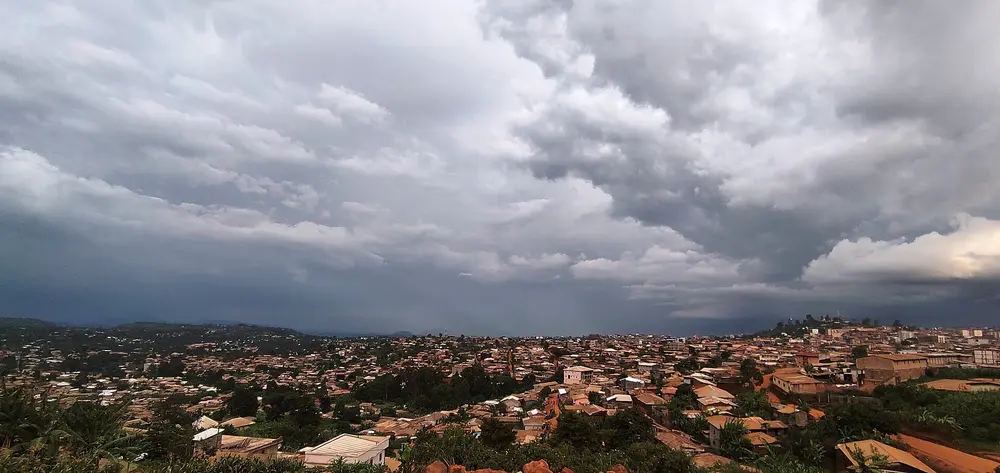
The rainy season is not a non-stop downpour — mornings are often bright, with heavy storms later in the day — but it does affect travel. Unpaved roads to Campo, the Dja and Lobéké can become impassable, journeys on paved highways lengthen and flights are delayed by storms. Build a buffer day into any itinerary that leaves the main paved axes between June and October.
Festivals and holidays to plan around
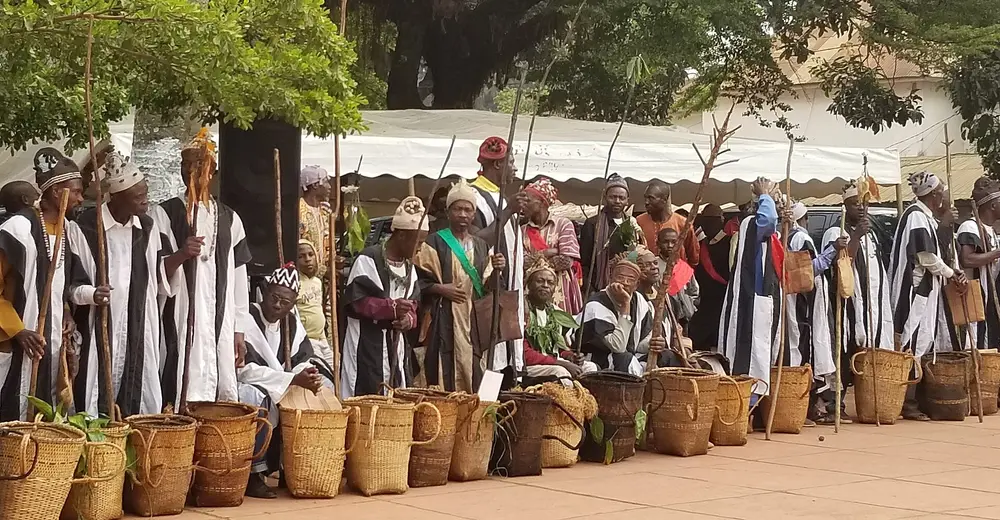
Late November to February is Cameroon's festival season: the Ngondo of the Sawa peoples on the Wouri in Douala (5–6 December 2026, according to Cameroon Tribune), the Bamoun Nguon in Foumban (biennial, held in December), and many funerals and chiefdom celebrations in the West. National Day on 20 May brings parades in every town. See festivals & public holidays for dates.
Weather and health
Malaria is present all year throughout the country, and mosquitoes multiply in the rainy months — take prophylaxis and use repellent whatever the season (CDC). In the dry season, harmattan dust can irritate eyes and throats in the north and, to a lesser degree, the highlands. The CDC recommends meningococcal vaccination for travellers to the meningitis-belt areas of the north during the dry season (roughly December to June). Heat is a real risk on the coast: drink plenty of water and avoid the midday sun.
Daylight and sunsets
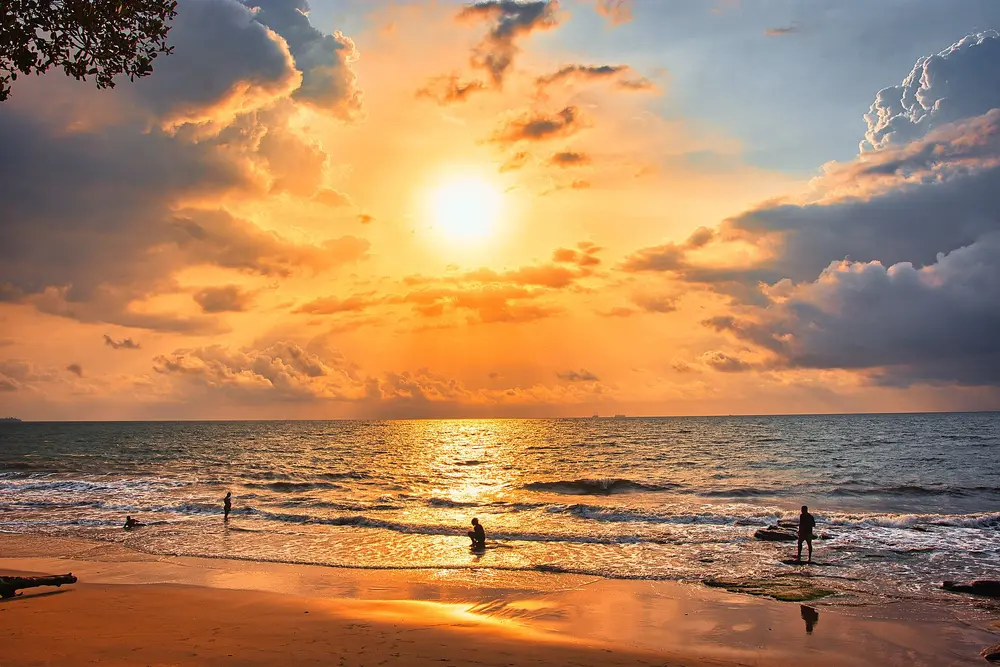
Near the equator, day length barely changes: in Douala and Kribi the sun rises around 6–6:30 AM and sets around 6–6:30 PM local time all year, with only short dusks. Plan long drives to finish by about 5 PM, as travel after dark is advised against. Cameroon uses West Africa Time (UTC+1) all year, with no daylight saving.
Is the rainy season a deal-breaker?
Not necessarily. Rain often falls as afternoon storms, the landscape is at its greenest, waterfalls are powerful and hotels are quieter. The real costs are slower roads, muddy forest trails, rougher seas and occasional flight delays. City breaks, museums, Foumban and the West work well in the rains; beach holidays, turtle watching and rainforest expeditions are best kept for the dry season.
Sea and swimming conditions
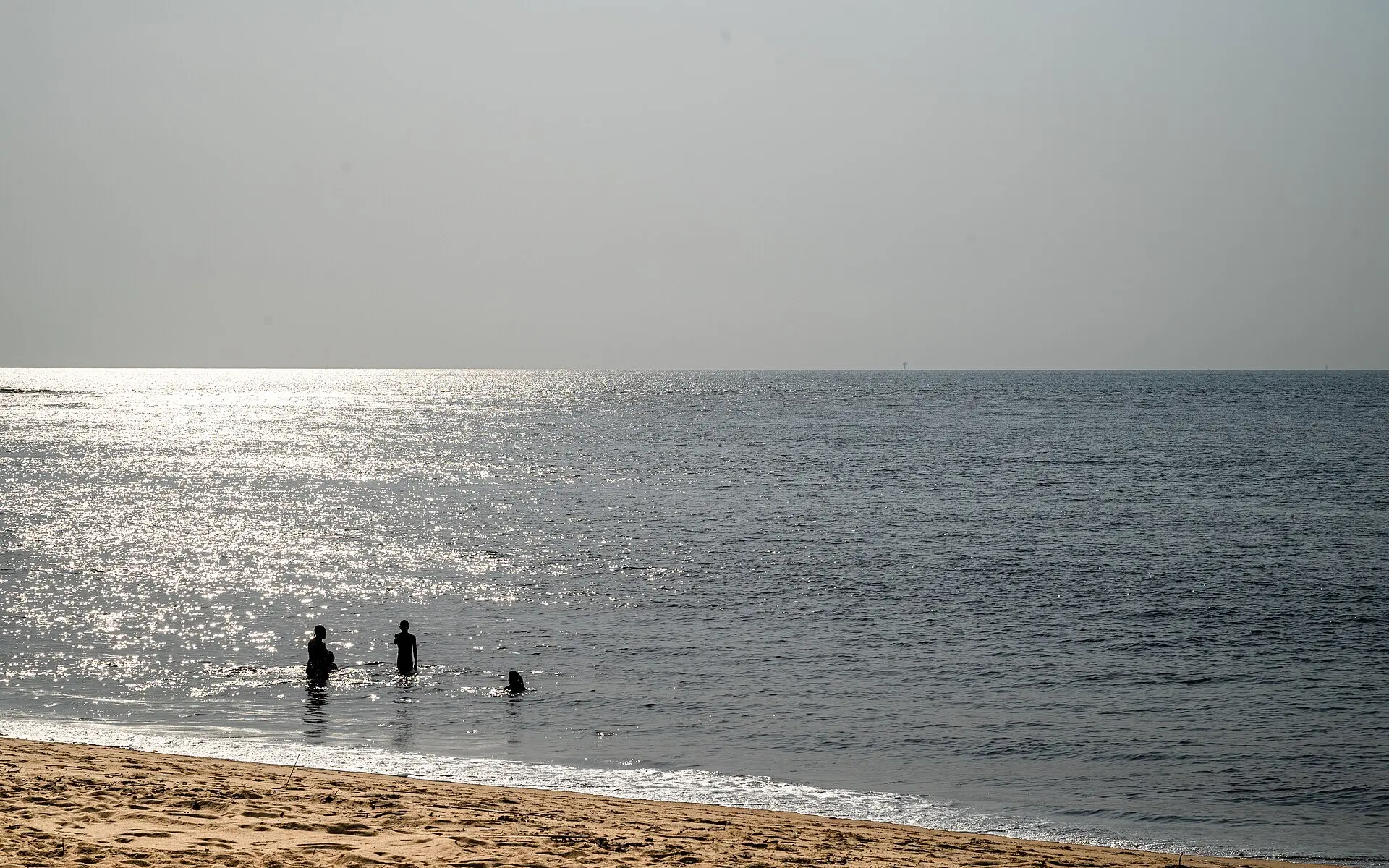
The Atlantic off Kribi and Campo is warm all year, typically in the high 20s °C. Swells and currents are stronger in the rainy season, especially from June to September, when some beaches have rough surf for days at a time. There are rarely lifeguards: swim where locals swim, never alone, avoid river mouths, and ask your hotel about the day's conditions. December to February brings the calmest, clearest water.
What to pack
- Light, breathable clothes; long sleeves and trousers for evenings (mosquitoes) and for chiefdoms and religious sites.
- A fleece or light jacket for the Western Highlands.
- A compact umbrella or rain jacket, even in the dry season.
- Sun hat, sunscreen and sunglasses.
- Closed shoes for forests and parks; sandals for the beach.
- Insect repellent, a torch or headlamp and a power bank.
Temperatures by place
| Place | Altitude | Typical day / night | Notes |
|---|---|---|---|
| Douala | Sea level | ≈ 30 / 23 °C | Very humid; heavy rain Jun–Sep |
| Kribi | Sea level | ≈ 30 / 23 °C | Sea breezes; slightly less rain than Douala |
| Yaoundé | ≈ 750 m | ≈ 28 / 19 °C | Two rainy seasons |
| Dschang | ≈ 1,400 m | ≈ 24 / 14 °C | Cool nights; bring a fleece |
| Foumban | ≈ 1,150 m | ≈ 27 / 16 °C | Mild |
| Maroua (reference) | ≈ 400 m | ≈ 35–40 / 22 °C | Very hot Mar–May |
Frequently asked questions
When is the rainy season in Cameroon?
On the coast, the heaviest rain falls from about June to October. Yaoundé and the south have two rainy seasons (March–June and September–November); the north's rains fall June–September.
What is the best month to visit Cameroon?
January is usually the best single month for the coast, Yaoundé and the highlands: dry, sunny and good for travel and festivals.
How hot does Cameroon get?
The coast stays around 23–32 °C with high humidity all year. The north can exceed 40 °C in March–May. The Western Highlands are mild, with cool nights.
Is Cameroon hot all year?
On the coast and in the forests, yes (around 23–31 °C). The Western Highlands are milder with cool nights, and the north is very hot from March to May.
What is the weather like in Cameroon in December?
Dry and sunny in the south and the West — one of the best months — with hot days on the coast and cool nights in the highlands.
Sources and official information
Facts were checked against these official and primary sources in November 2026. Security advice, visa rules, prices and timetables change, so confirm before you go.
VisitCameroon.com is an independent guide, not the official site of the Ministry of Tourism and Leisure (MINTOUL), the Government of Cameroon or any operator. Some links are affiliate links: hotels go to Booking.com and tours to GetYourGuide, and we may earn a commission at no extra cost to you.