In short
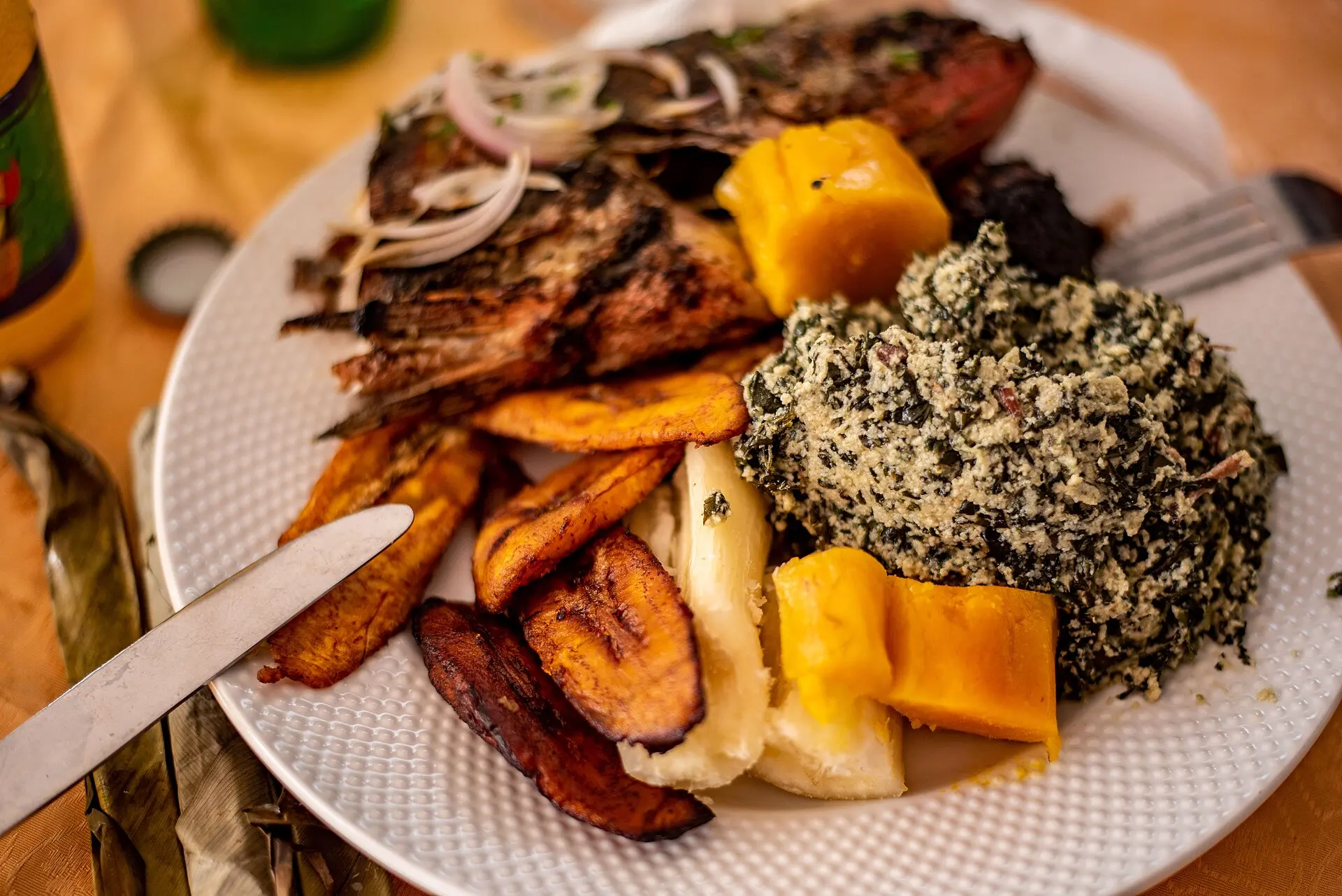
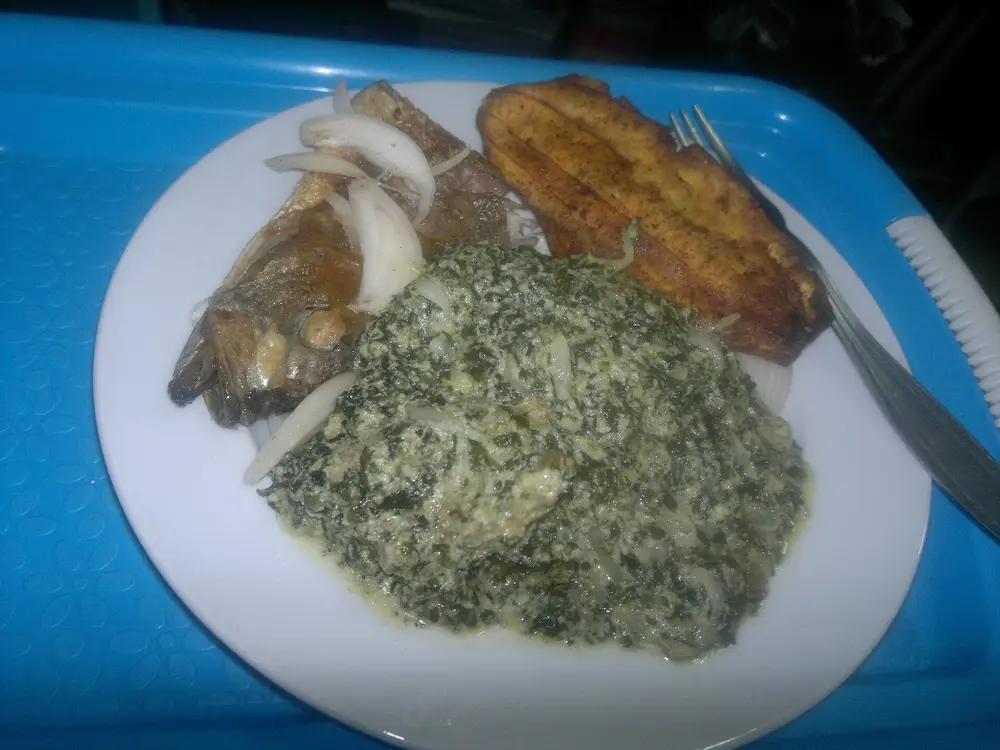
- National dish: ndolé — bitter-leaf stew with ground peanuts, shrimp or beef, served with plantains or miondo.
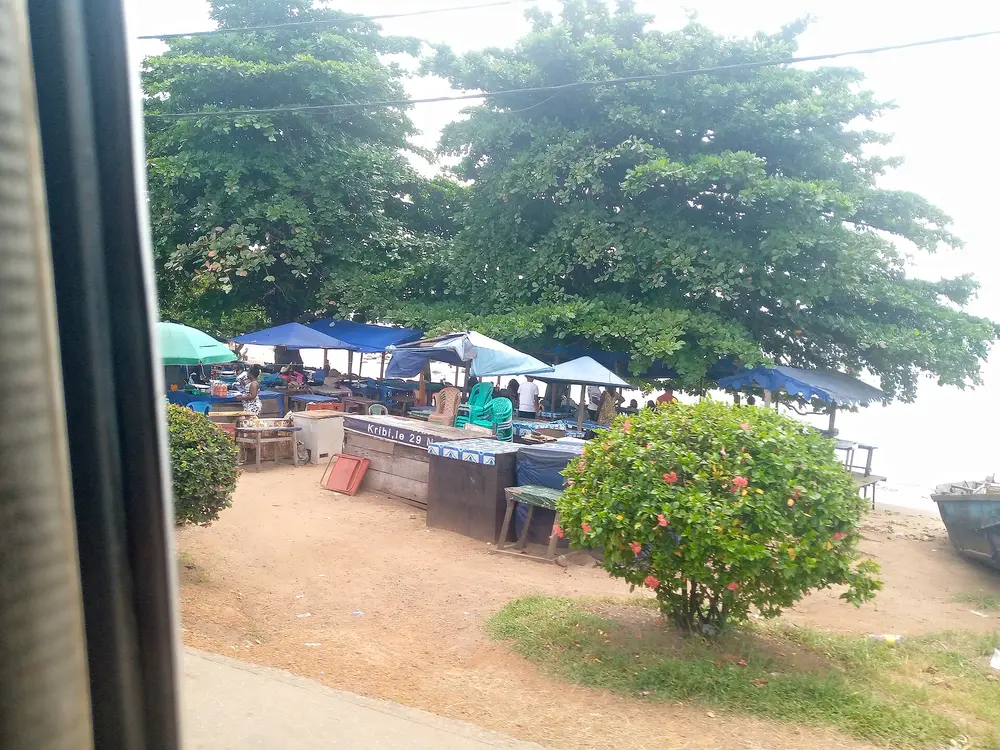
- On the coast: poisson braisé (spiced grilled fish) with plantains and chili; prawns at Kribi.
- In the West: achu with yellow soup, koki (black-eyed pea cake), taro dishes.
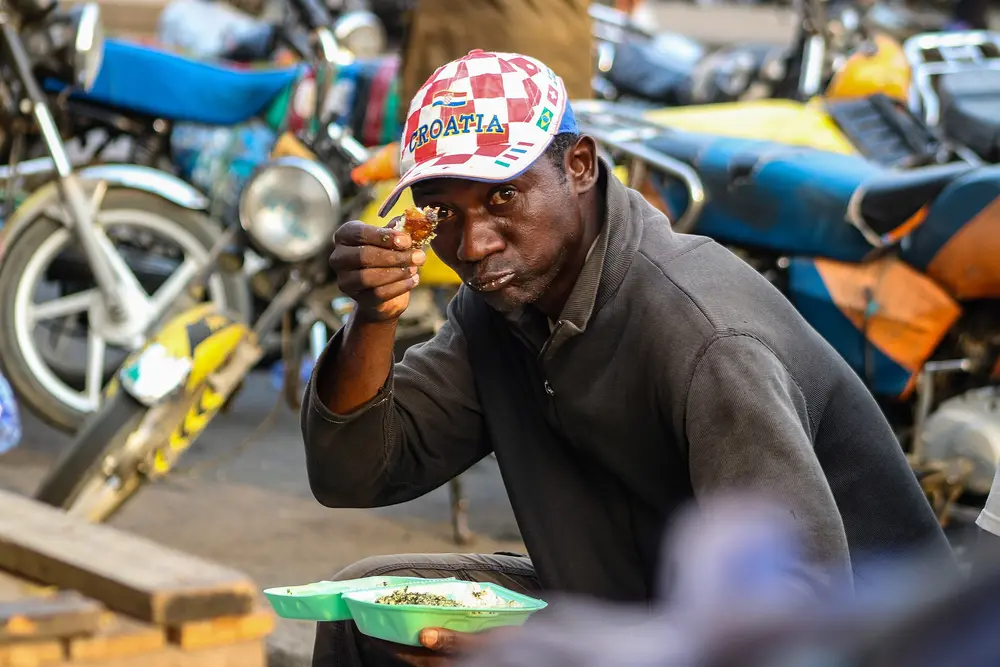
- Street food: soya (spicy beef skewers), beignets-haricots (doughnuts and beans), roasted corn and safou (plums).
- Drinks: local beers, palm wine, and fresh juices; drink bottled water.
Ndolé and the dishes of the coast
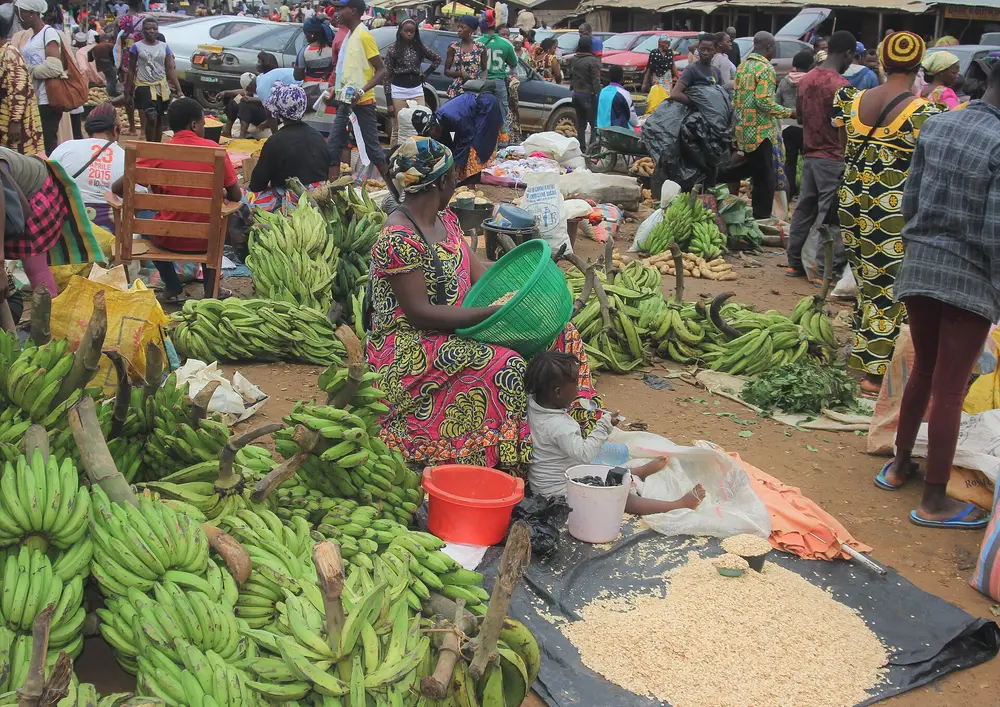
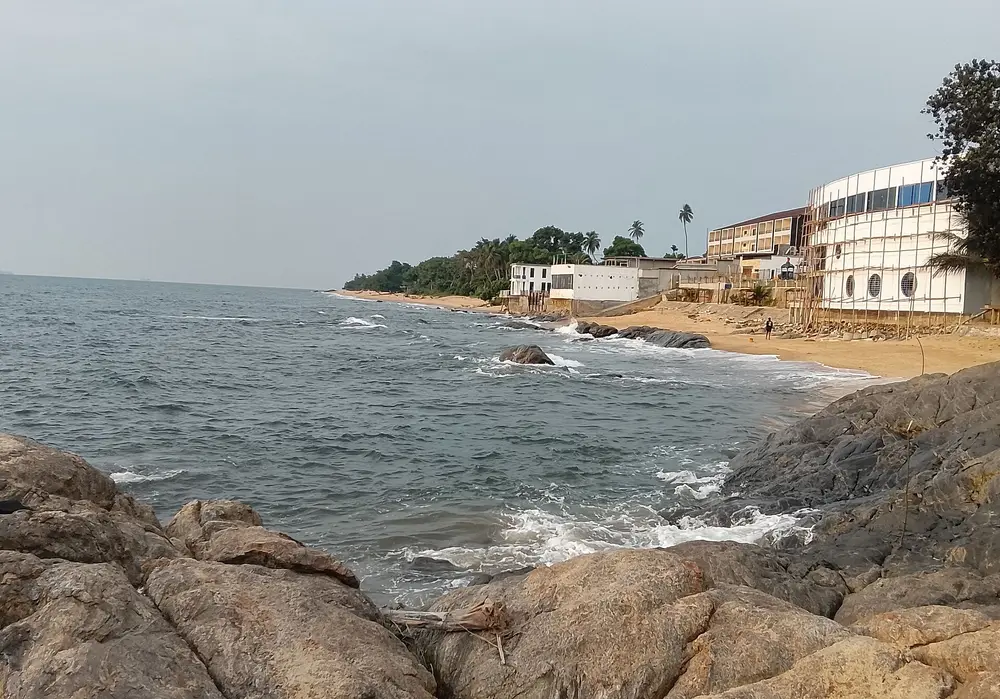
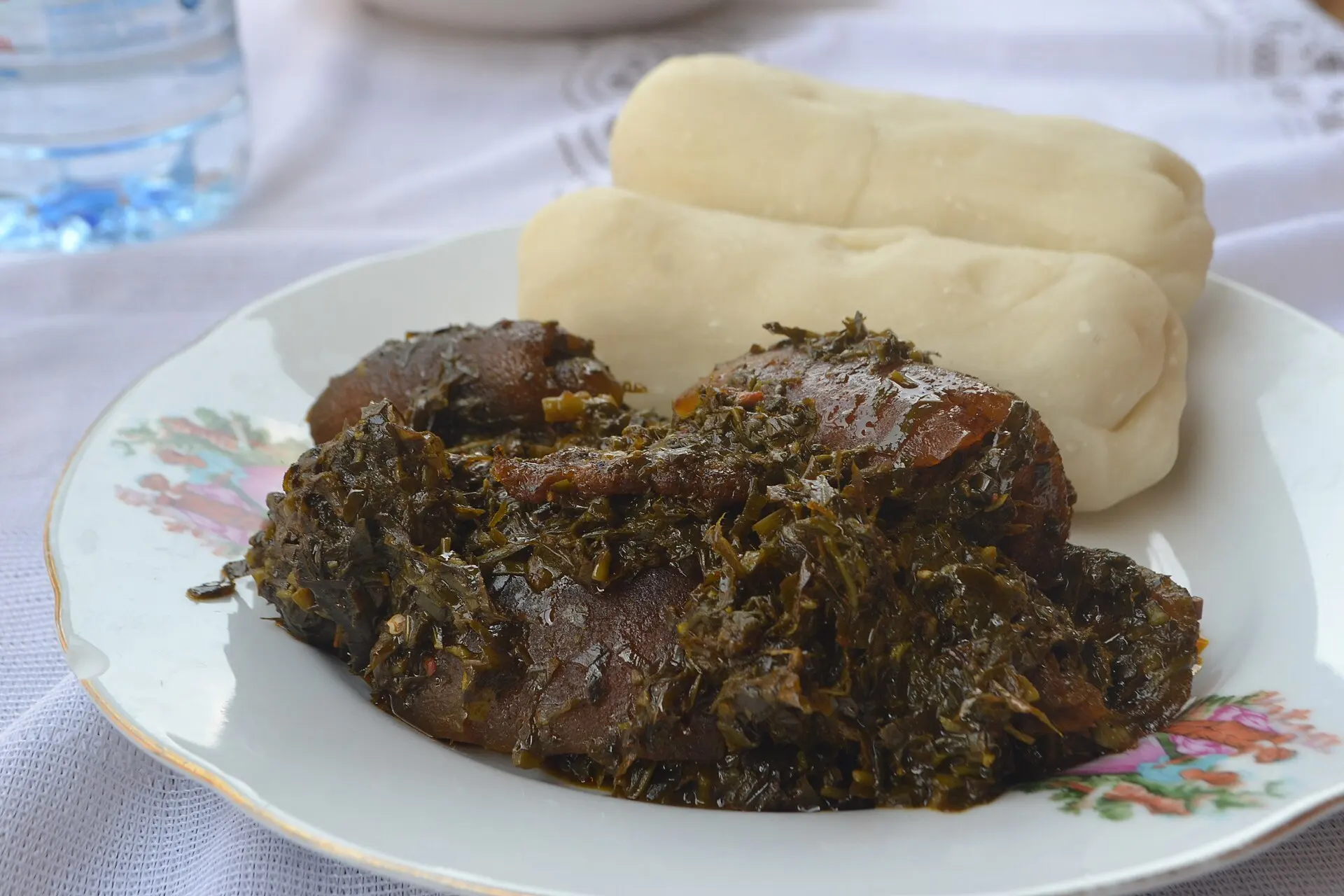
Ndolé, from the Sawa coast around Douala, is the dish every Cameroonian names first: bitter leaves (Vernonia) washed and cooked with ground peanuts, garlic and oil, with shrimp, smoked fish or beef. It comes with boiled or fried plantains, miondo or bobolo (fermented cassava sticks wrapped in leaves). On the beaches of Kribi and Limbe, poisson braisé — fish (often bar or tilapia) rubbed with spices and grilled over charcoal — is eaten with plantains, a fiery pepper sauce and cold beer.
Ten dishes to try, and where
| Dish | What it is | Best place to try |
|---|---|---|
| Ndolé | Bitterleaf with ground peanuts and shrimp or beef | Douala |
| Poulet DG | 'Director-general's chicken': fried chicken with plantains and vegetables | Restaurants everywhere; festive meals |
| Soya | Spiced, grilled beef skewers sold at night | Street grills in every city |
| Poisson braisé | Whole fish grilled with spices, with plantains or miondo | Kribi, Douala |
| Mbongo tchobi | Black, smoky-spiced fish or meat stew | Douala, Edéa |
| Koki | Steamed cake of black-eyed peas and red palm oil | The West, Douala |
| Achu & yellow soup | Pounded cocoyam with a spiced palm-oil sauce | The West (Grassfields) |
| Okok | Shredded Gnetum leaves with peanuts | Yaoundé |
| Sanga | Maize with cassava leaves and palm juice | Yaoundé and the Centre |
| Beignets-haricots-bouillie | Puff-puff, spiced beans and maize porridge | Breakfast stalls everywhere |
The West and the North-West kitchen
In the Grassfields, the ceremonial dish is achu: pounded cocoyam shaped into a well and filled with a bright yellow soup made with palm oil and limestone. Koki is a steamed cake of black-eyed peas and palm oil wrapped in banana leaves; taro with yellow sauce and kondre (plantain and meat stew) are other favourites. Eru, wild Gnetum leaves cooked with waterleaf, palm oil and smoked fish, is eaten with water fufu (fermented cassava) and is a classic of the South-West.
Street food and snacks
- Soya: thin beef skewers with a spicy peanut-pepper coating, grilled by Hausa vendors at night.
- Beignets-haricots-bouillie: puff-puff doughnuts with spiced beans and maize porridge — the classic breakfast.
- Roasted corn and safou (African plums, roasted or boiled) in the rainy season.
- Brochettes of fish or goat, and grilled plantains ('plantains braisés') with groundnuts.
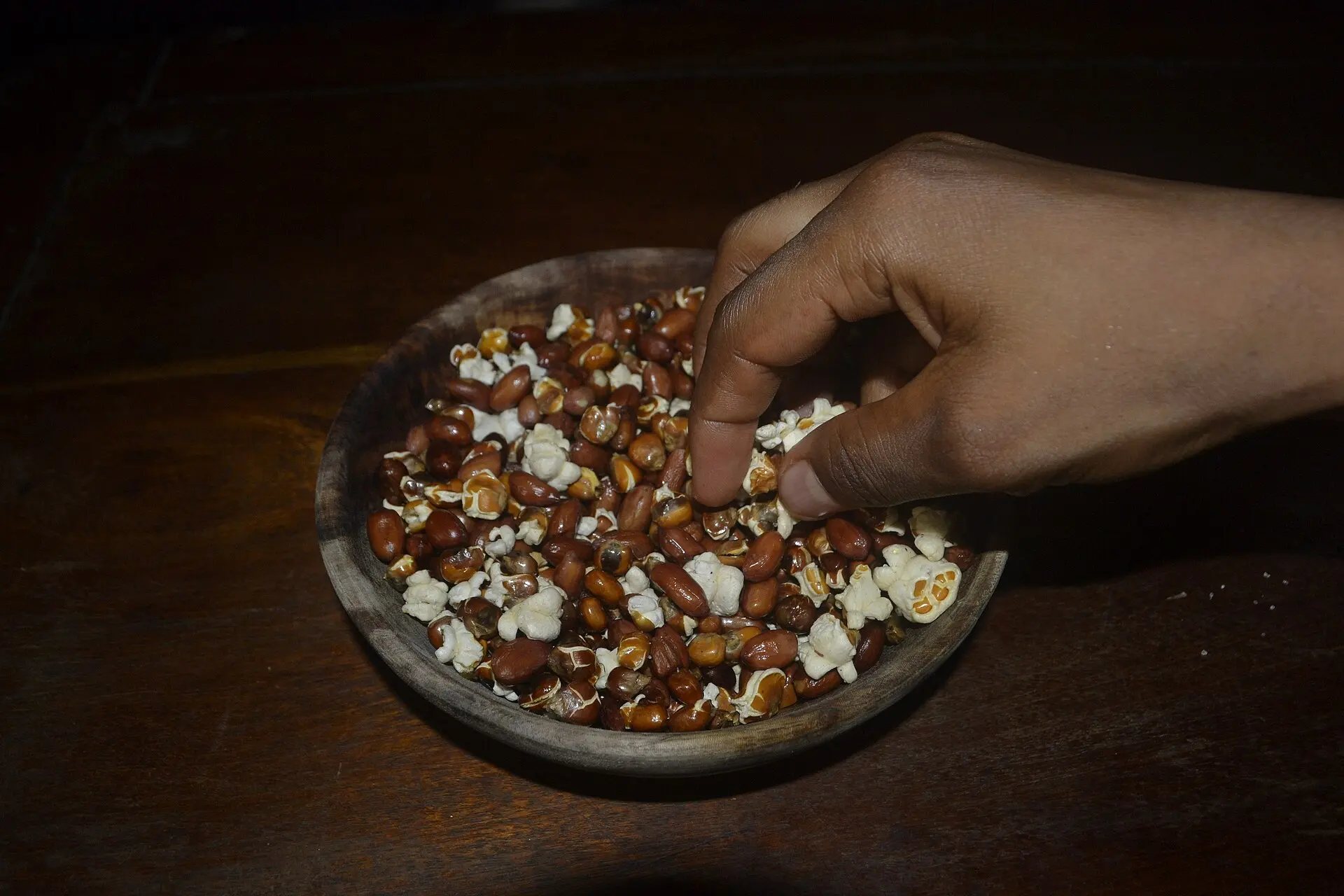
- Maïs-arachides: boiled corn with peanuts, a popular snack.
Poulet DG and the celebration table
Poulet DG — 'director-general's chicken' — tells you something about Cameroonian humour: a dish of fried chicken pieces simmered with ripe fried plantains, carrots, green beans, peppers and tomatoes, once considered fit for a company boss and now a staple of weddings, birthdays and restaurant menus. At celebrations it shares the table with ndolé, grilled fish, rice, salads and plenty of beer and soft drinks. Portions are generous, and refusing food can seem impolite — take a little of everything.
Southern and forest dishes
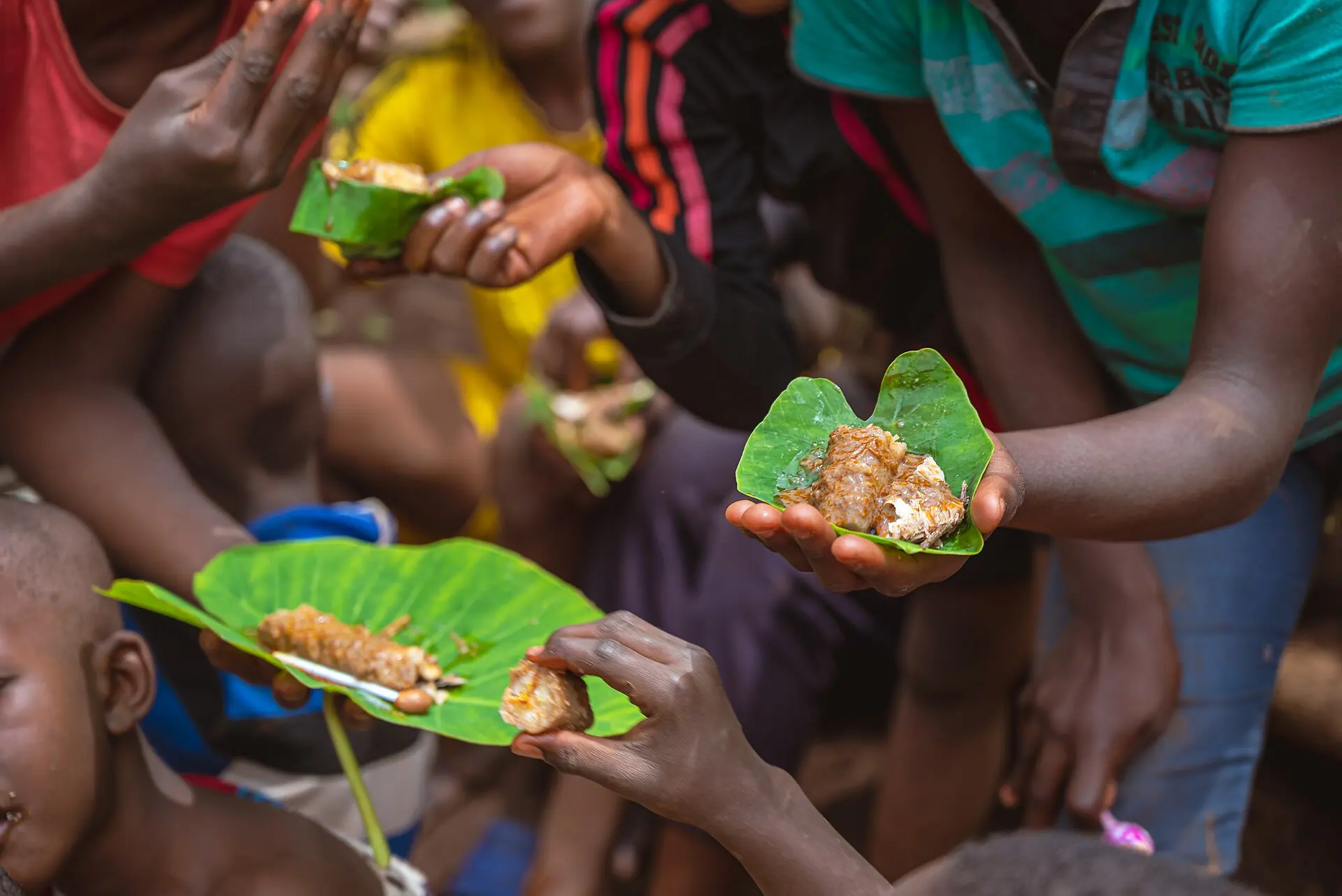
In the Centre and South, sanga (maize, cassava leaves and palm juice), okok (wild Gnetum leaves with peanuts and cassava) and mbongo tchobi — a black spicy fish stew coloured with charred spices, a Basaa speciality — are worth seeking out. Pistachio (ground squash seeds, mets de pistache) is cooked with fish in leaf parcels. Avoid bushmeat (viande de brousse): much of it comes from protected species, and its trade fuels poaching and health risks.
Drinks
Cameroon's breweries produce popular lagers sold in large bottles; palm wine (matango) is tapped fresh in the villages, and raffia wine in the West. Fresh juices — passion fruit, pineapple, baobab (bouye) in the north, hibiscus (folere) — are delicious. Cameroon grows fine arabica coffee in the West and robusta elsewhere, and cocoa in the south; a coffee farm visit is possible around Dschang and Foumban.
Drinks to try
- Local lagers: sold in large bottles everywhere; drunk cold, often shared.
- Palm wine (matango): fresh from the tree, sweet in the morning and stronger by evening.
- Foléré (hibiscus) and baobab juices: refreshing non-alcoholic choices, especially in Muslim areas.
- Ginger juice: fiery and sweet, sold in bottles at markets.
- Highland coffee: ask for Cameroonian arabica in the West.
Where to eat
In Douala and Yaoundé, the range runs from grilled-fish joints and 'circuits' (informal home restaurants) to French, Lebanese and Asian restaurants in Akwa, Bonapriso and Bastos. In Kribi, eat at the beach restaurants and the fish market near the port. Everywhere, look for busy places with high turnover and freshly grilled food. A 'tourne-dos' (roadside eatery) meal is a cheap, authentic option for the adventurous; carry hand sanitiser.
What a meal costs
Eating local is good value: a plate of beignets-haricots for breakfast, a few soya skewers or a roadside lunch costs little, and a whole grilled fish with plantains in a braiserie costs a few thousand CFA francs depending on size and species — agree the price first. Restaurants in Bonapriso, Akwa and Bastos charge international prices, and imported wine is expensive. Keep small notes; many eateries can't change large bills, and few take cards outside hotels.
Eating out: practical tips
- Lunch is the main meal for many Cameroonians; dinner starts late in cities.
- In braiseries, choose your fish, agree the price (often by size) and wait while it's grilled.
- Ask for pepper sauce 'à côté' (on the side) if you're unsure about heat.
- Water: bottled only; ice is usually made from treated water in good restaurants but avoid it elsewhere.
- Vegetarians: plantains, beans, koki, vegetable sauces and fruit are easy; many sauces include fish or crayfish powder — ask.
Breakfast, snacks and sweets
A Cameroonian breakfast is often beignets (puff-puff), bouillie (maize or millet porridge) and beans, or bread with omelette and tea or Nescafé from a roadside 'tourne-dos'. Fruit is superb: pineapples, papayas, mangoes in season, bananas of many kinds, safou (African plum, eaten roasted), avocados and citrus. Roasted groundnuts and plantain chips are sold everywhere. Cameroonian chocolate and coffee are increasingly sold as quality products in city supermarkets.
Learn to cook it
A traditional cooking workshop in Yaoundé is now listed on GetYourGuide (newly listed, no reviews yet as of November 2026) — a hands-on way to learn the dishes of the Centre and South. In Douala and Kribi, ask your hotel or guide whether a local cook offers market-and-cooking sessions.
Traditional cooking workshop in Yaoundé
A traditional cooking workshop in Yaoundé — a hands-on introduction to Cameroonian food. Newly listed on GetYourGuide with no reviews yet (November 2026) — check the itinerary and inclusions on the listing.
Check availabilityBook via GetYourGuideTour listings are on GetYourGuide. Prices, times and cancellation terms are shown live on each listing and can change; VisitCameroon.com may earn a commission at no extra cost to you.
Vegetarian and special diets
Cameroonian cooking leans heavily on meat and fish, but vegetarians can eat well with plantains, beans, koki, roasted corn, avocado, fruit and many leaf sauces — ask for them 'sans viande, sans poisson' and check whether stock or dried fish was used. Pepper is usually served on the side. Gluten-free travellers do well with cassava, plantain and rice dishes. In the Muslim north and in Foumban, pork is rare and alcohol less visible.
Table manners
Wash your hands before eating — a bowl of water is often brought to the table. Many dishes such as fufu, achu and couscous de maïs are eaten with the right hand; cutlery is always available in restaurants. Wait for elders or your host to start, and expect to be offered more. In homes, it is polite to taste everything you are served.
Regional specialities at a glance
| Region | Try | Notes |
|---|---|---|
| Littoral (Douala) | Ndolé, mbongo tchobi, poisson braisé | Sawa and Basaa cooking |
| South (Kribi) | Grilled fish, prawns, bobolo | Fish market and beach grills |
| Centre (Yaoundé) | Okok, sanga, kpem | Beti specialities |
| West | Achu and yellow soup, koki, taro | Ceremonial and everyday dishes |
| South-West / North-West | Eru and water fufu, kati kati | Under travel advice; found in Douala and Yaoundé |
| North | Couscous of millet or maize with gombo (okra) sauce, kilishi (dried spiced meat) | Sahelian cuisine |
Frequently asked questions
What is the national dish of Cameroon?
Ndolé, a stew of bitter leaves with ground peanuts and shrimp, fish or beef, served with plantains or cassava sticks.
Is Cameroonian food spicy?
The dishes themselves are usually moderate; the heat comes from the pepper sauce (piment) served on the side.
Is it safe to eat street food in Cameroon?
Freshly grilled food from busy stalls is generally fine. Avoid raw salads and tap water, and choose places with high turnover.
What do Cameroonians eat for breakfast?
Often beignets (puff-puff) with beans and bouillie (porridge), or bread with omelette and tea from a roadside stall.
What is poulet DG?
A festive Cameroonian dish of fried chicken cooked with fried ripe plantains, carrots, green beans and peppers; 'DG' stands for directeur général.
What is soya in Cameroon?
Thin beef skewers rubbed with a spicy peanut-and-pepper mix and grilled at night by street vendors, served with raw onion and chilli.
Sources and official information
Facts were checked against these official and primary sources in November 2026. Security advice, visa rules, prices and timetables change, so confirm before you go.
VisitCameroon.com is an independent guide, not the official site of the Ministry of Tourism and Leisure (MINTOUL), the Government of Cameroon or any operator. Some links are affiliate links: hotels go to Booking.com and tours to GetYourGuide, and we may earn a commission at no extra cost to you.