In short
- Best crafts: Foumban's artisans' street (bronze casting, carved wood, beadwork), Bamileke masks and stools, indigo ndop cloth.
- Food souvenirs: Penja white pepper (with protected geographical indication), arabica coffee from the West, cocoa.
- Markets: Marché Central and Marché des Fleurs (Douala), Mokolo and Mfoundi (Yaoundé), Foumban's market.
- Rules: no ivory, skins or protected wildlife products; export of genuine antiquities needs permits.
Foumban: the crafts capital
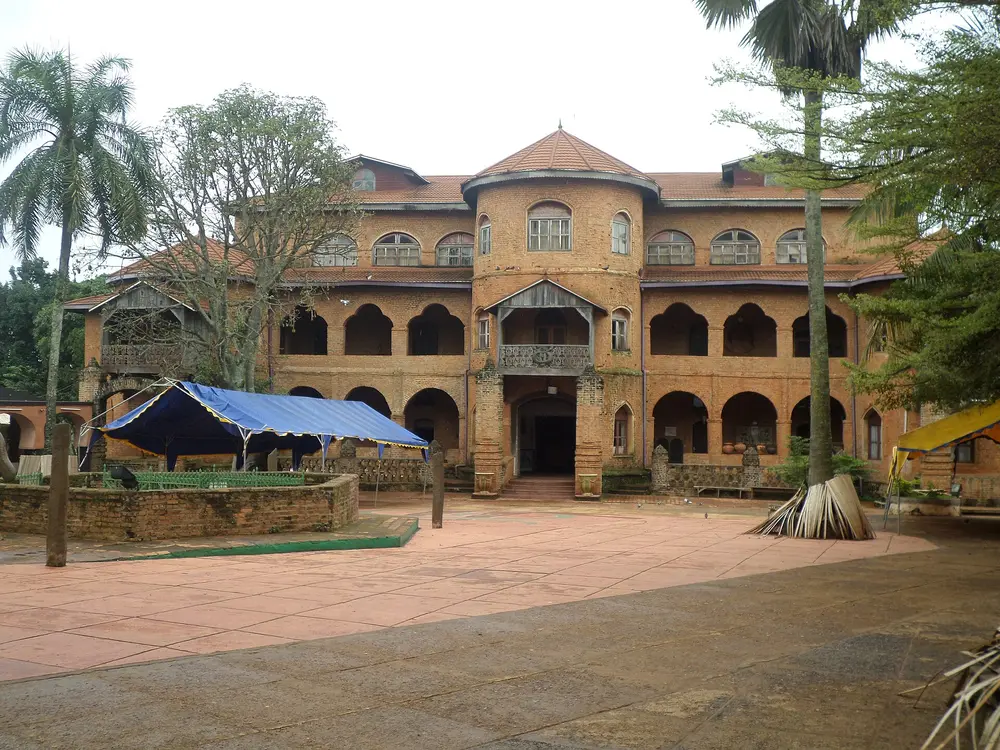
The Bamoun kings patronised artists for centuries, and Foumban remains Cameroon's crafts capital. Along the artisans' street (rue des Artisans) near the palace, workshops cast bronze and brass by the lost-wax method, carve wood (masks, stools, statues, doors) and sew beadwork. You can watch the casting process, which is fascinating. Prices are negotiable; buy from the workshop rather than from intermediaries when you can. See Foumban.
What to buy, and where
| Item | Where | Tips |
|---|---|---|
| Lost-wax bronzes | Foumban artisans' street | Each piece unique; watch a casting |
| Carved masks, stools, doors | Foumban; craft markets in Yaoundé and Douala | Most 'antiques' are new — that's fine |
| Ndop indigo cloth | The West; craft markets | Ask about natural vs synthetic dyes |
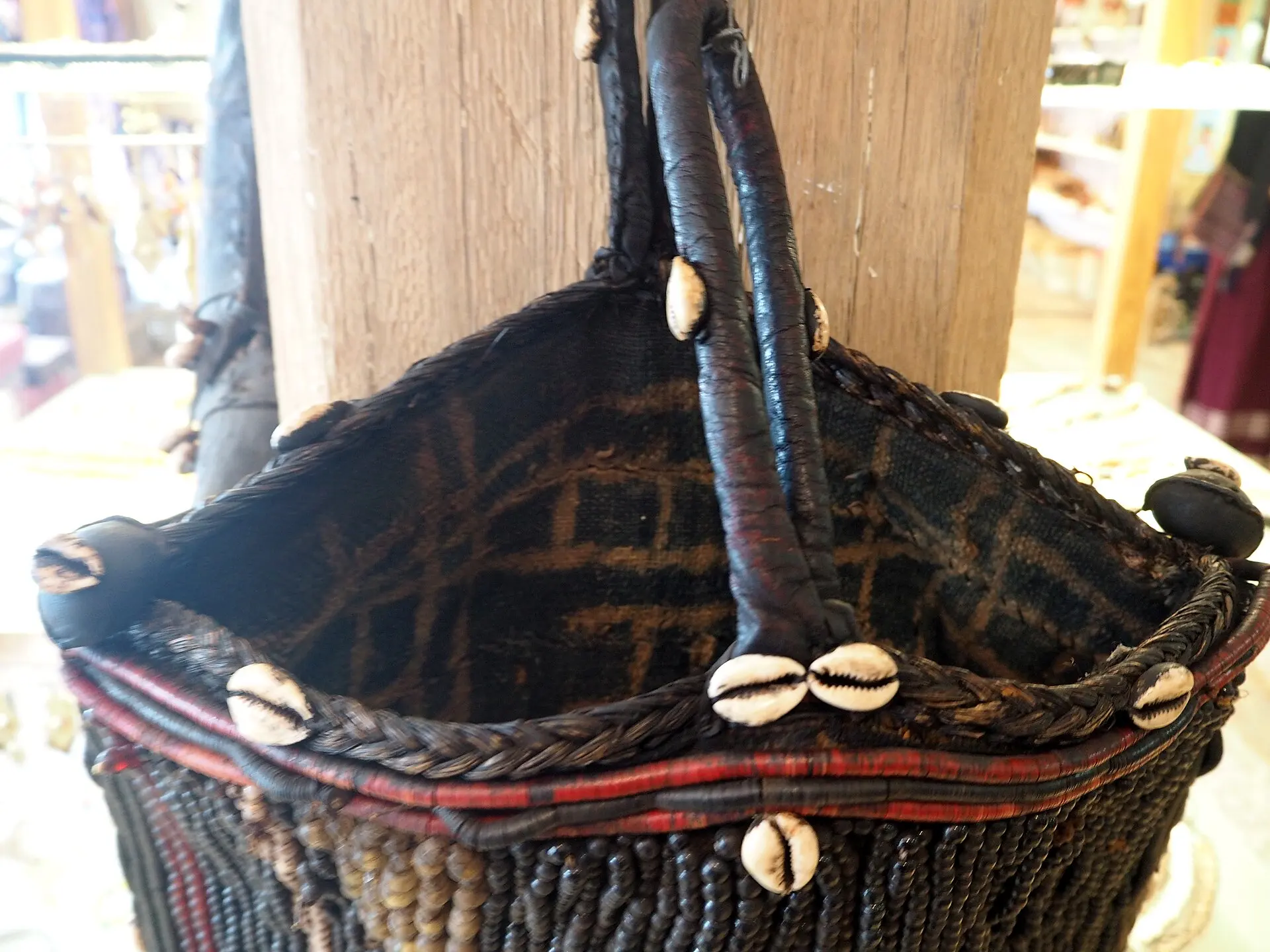
| Beaded bags and caps | Bafoussam, Foumban, craft markets | Check stitching and bead quality |
| Wax-print fabric | Every market | Have a tailor make clothes in a day or two |
| Penja white pepper | Supermarkets, markets in Douala | Protected geographical indication |
| Arabica coffee, cocoa, chocolate | Supermarkets; the West for coffee | Good, light gifts |
| Baskets and raffia | Roadside sellers, markets | Pack flat; light to carry |
Textiles: ndop and wax prints
Ndop is the indigo-dyed, resist-patterned cloth of the Grassfields kingdoms, once reserved for royalty and worn at ceremonies; its white geometric motifs on deep blue inspired the palette of this site. You'll find it, and Bamileke beaded caps and bags, in craft markets in the West, Yaoundé and Douala. Wax-print fabrics are sold by the 'pagne' in every market — a tailor will make a shirt or dress in a day or two.
Having clothes made
One of the best souvenirs of Cameroon is a shirt, dress or outfit cut from wax-print fabric by a local tailor. Buy fabric by the 'pagne' or the 'complet' in a market, take it to a tailor recommended by your hotel or guide, and agree the price and collection date in advance — simple pieces can be ready within a day or two, more elaborate ones take longer. Bring a garment that fits you well to be copied, and allow time for a fitting.
Markets
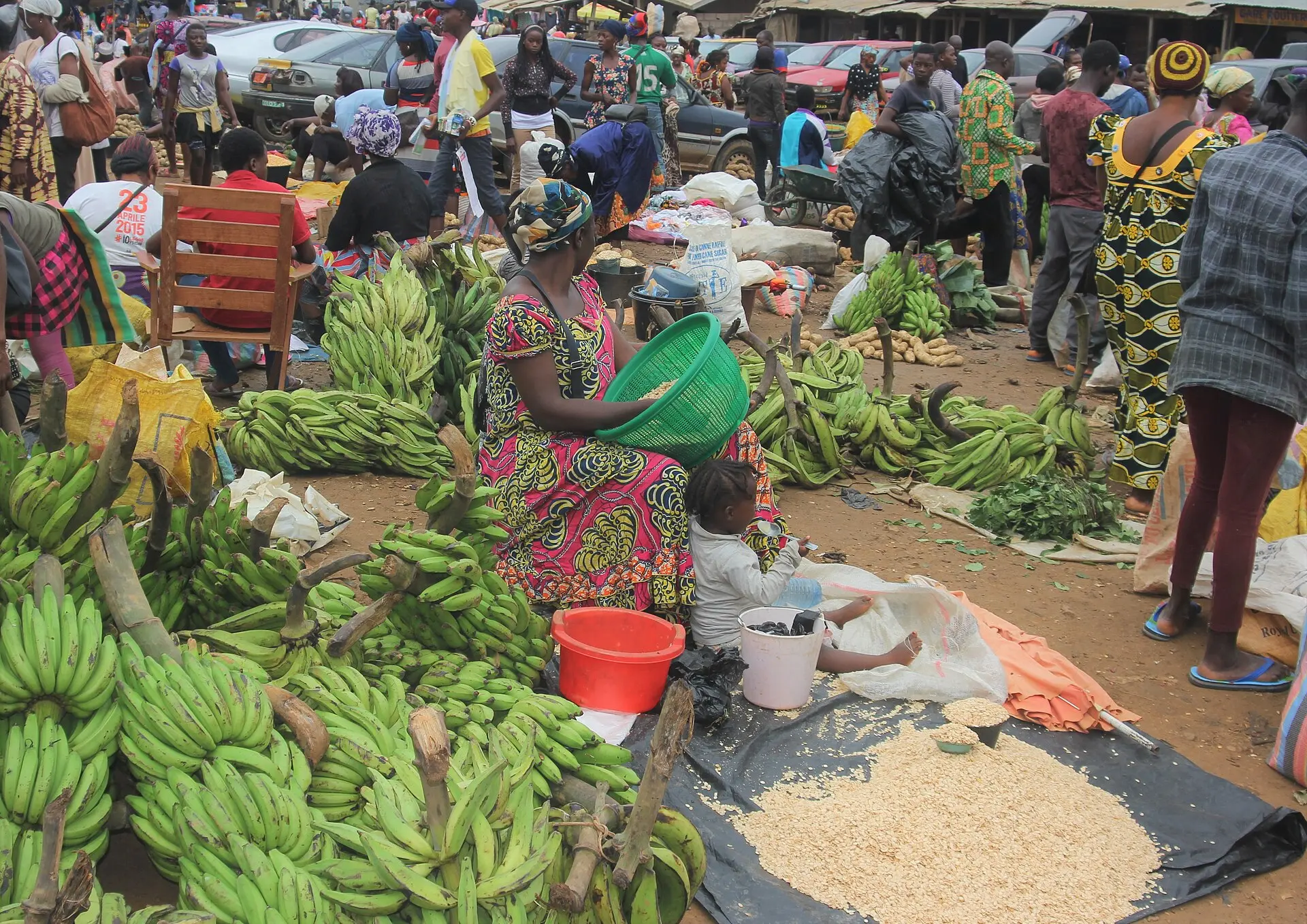
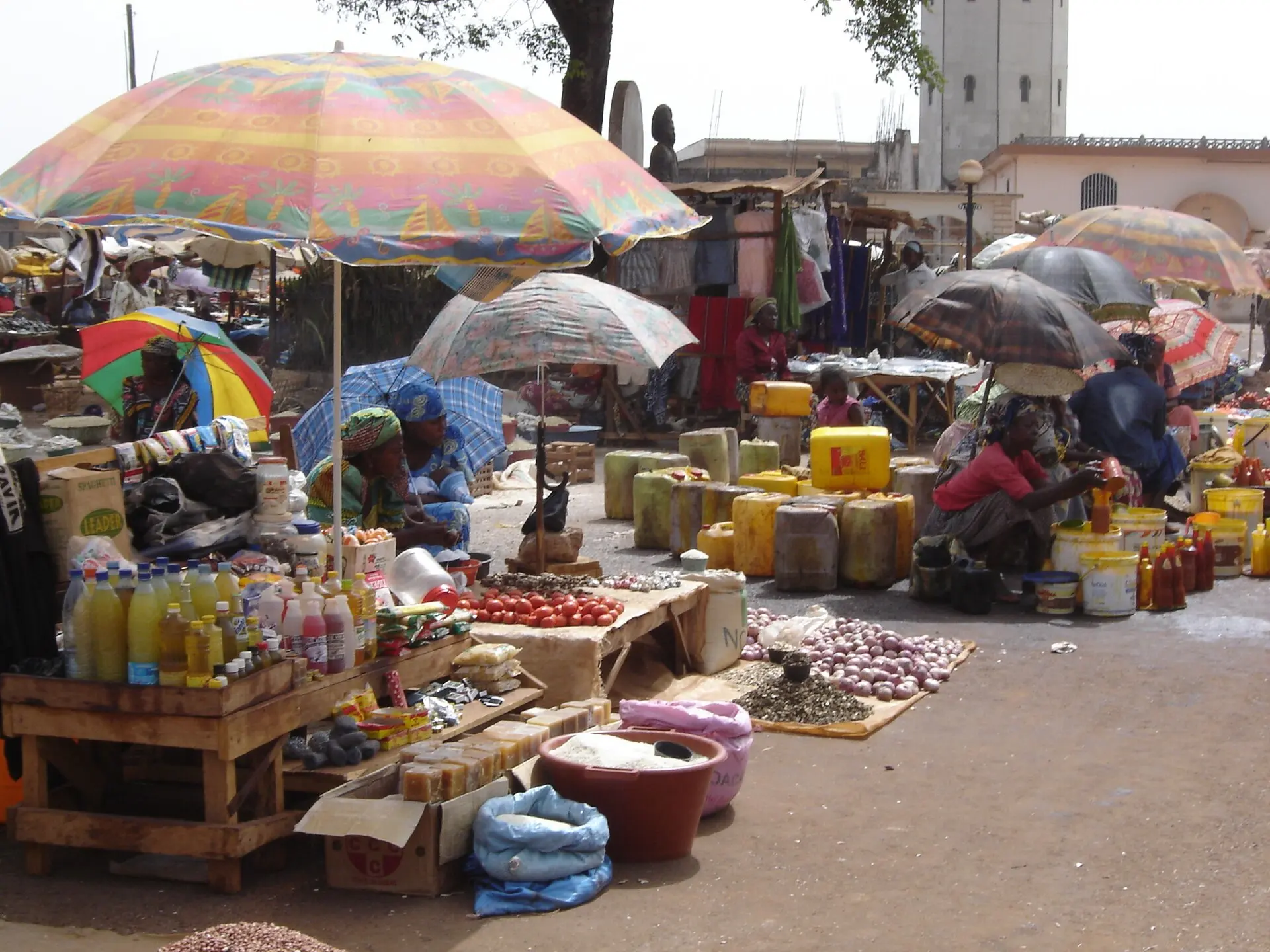
- Douala: Marché Central (huge and chaotic — go with someone local), Marché des Fleurs and the craft market near it, Marché Sandaga for food.
- Yaoundé: Mokolo market (the city's largest), Mfoundi market, and the craft market (marché artisanal) near the centre.
- Foumban: the main market and the artisans' street.
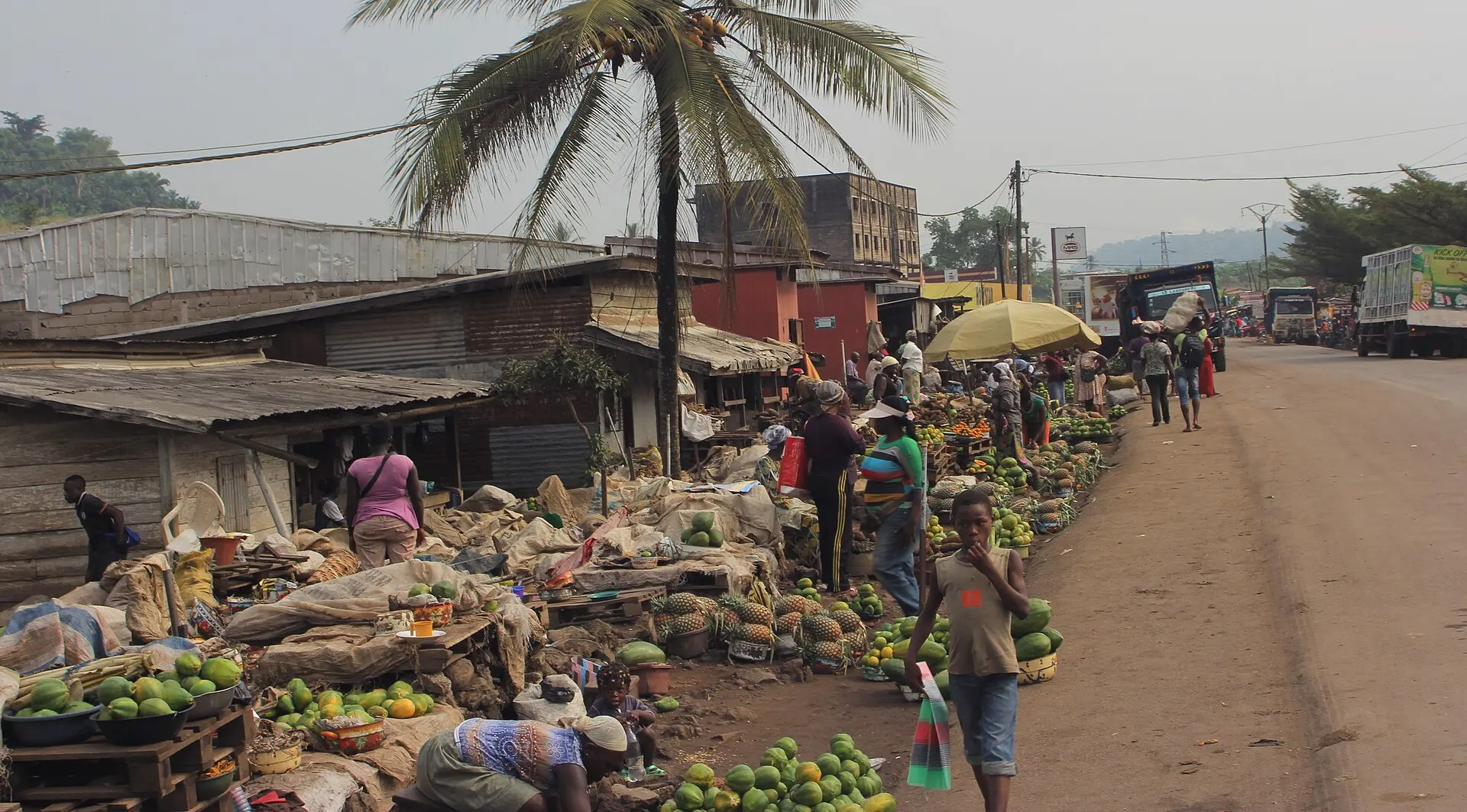
- Kribi: the fish market by the port, and roadside sellers of fruit and smoked fish.
Watch for pickpockets in crowded markets, keep your phone out of sight and carry small notes.
Shopping by destination
- Douala: the craft market near the Marché des Fleurs, supermarkets for coffee and Penja pepper, tailors in every district. Douala.
- Yaoundé: the marché artisanal near the centre for masks, carvings and textiles; Mokolo for everyday goods. Yaoundé.
- Foumban: the artisans' street and workshops — the best place in the country for bronzes and carvings. Foumban.
- The West: beadwork, ndop cloth and highland coffee around Bafoussam and Dschang. Dschang & Bafoussam.
- Kribi: baskets, shell-free souvenirs and fresh seafood — but leave coral and turtle products alone. Kribi.
Food to bring home
Penja pepper, grown on volcanic soils around Penja in the Moungo valley, was the first African product to gain a protected geographical indication (OAPI, 2013); white Penja pepper is prized by chefs. Highland arabica coffee from the West and cocoa from the Centre and South make good gifts. Check your home country's customs rules for food imports.
Supermarkets and malls
Douala and Yaoundé have modern supermarkets and shopping centres with fixed prices, card payment and air conditioning — convenient for coffee, chocolate, Penja pepper, toiletries and snacks for long road trips. Prices are higher than in markets, especially for imported goods. In smaller towns, general stores ('boutiques') and markets are the norm, and cash is essential.
Fair prices: what to expect
We don't print prices, but a few rules of thumb help. Small brass figures, beaded keyrings and baskets are inexpensive; large bronzes, carved stools and doors are priced in tens or hundreds of thousands of CFA francs, reflecting days of work. Fabric is sold by length, with quality wax prints costing more than cheaper imitations. In workshops, the first price is an opening offer; in supermarkets and boutiques with marked prices, it isn't. If something seems very cheap for a 'genuine antique', it is new — which is perfectly fine if you like it.
Paying for purchases
Cash is king in markets and workshops — bring small notes. Mobile money (MTN MoMo, Orange Money) is widely accepted if you have a local SIM. Cards work in supermarkets, malls and some larger craft shops in Douala and Yaoundé, sometimes with a surcharge. For expensive items, ask for a written receipt with the seller's name, which also helps at customs.
Souvenirs on a budget
Light, affordable and authentic: a length of wax-print fabric, a small lost-wax brass figure from Foumban, a beaded keyring or bracelet from the West, a bag of Penja pepper, a packet of highland coffee or a bar of Cameroonian chocolate. All pack easily and support local producers. Buy coffee and pepper in sealed packaging if you need to pass customs at home.
Bargaining and fair buying
Bargaining is normal for crafts and in markets: start by asking the price, offer around half to two-thirds, and settle with a smile. Don't bargain hard over tiny sums with small producers. Never buy ivory, skins, turtle shell, live animals or bushmeat — all illegal to export and harmful to wildlife. Genuine old masks and statues are cultural heritage; exporting antiquities requires authorisation, and most items sold as 'antique' are recent.
Shipping and customs
Large carvings and doors are heavy: ask the workshop to pack them for air travel, or use an international courier from Douala or Yaoundé, and keep invoices. On departure, customs may ask about valuable crafts — receipts help. Exporting antiques and cultural heritage objects requires authorisation, and wildlife products are prohibited. At home, check your own country's import rules for wood (some require treatment) and food.
Market etiquette
- Greet the seller before asking prices — 'Bonjour' or 'Good morning' goes a long way.
- Ask before photographing stalls and people.
- Bargain with a smile, and don't start a negotiation you don't intend to finish.
- Carry small notes; sellers often can't change 10,000 XAF bills.
- Go in the morning, when it is cooler and less crowded, ideally with a local companion in the big city markets.
What not to buy
- Ivory, skins, teeth and anything from protected animals — illegal to sell and export.
- Turtle shell, coral and shells taken from reefs.
- Genuine antique masks and statues without an export authorisation.
- Bushmeat or 'medicinal' animal products.
- Counterfeit branded goods — they may be confiscated at home.
Practicalities
Carry cash in small notes; card payment is rare outside supermarkets and hotels. Larger craft pieces can be wrapped for travel — ask the seller to pack carefully, and keep receipts for customs. Supermarkets in Douala, Yaoundé and Kribi sell coffee, pepper and chocolate in gift-friendly packaging. Airport shops have a limited selection at higher prices.
Frequently asked questions
What souvenirs should I buy in Cameroon?
Foumban bronze and woodcarvings, Bamileke beadwork, ndop cloth, Penja white pepper and highland coffee.
Where is the best place to buy crafts in Cameroon?
The artisans' street in Foumban, then the craft markets of Yaoundé and Douala.
Can I pay by card in Cameroonian markets?
No — markets and craft stalls are cash only; carry CFA francs in small notes.
What is ndop cloth?
Indigo-dyed, resist-patterned cotton cloth of the Grassfields kingdoms, with white geometric motifs on deep blue, traditionally worn by royalty and at ceremonies.
Can I bring Cameroonian coffee and pepper home?
Usually yes, in sealed commercial packaging, but check your own country's customs rules for food imports.
Is bargaining expected in Cameroon?
Yes, in markets and craft workshops; start around half to two-thirds of the asking price and settle with a smile. Supermarkets and shops have fixed prices.
Where can I buy Penja pepper?
In supermarkets and some markets in Douala and Yaoundé, often in gift packaging; look for the protected geographical indication on the label.
Are there shopping malls in Cameroon?
Yes, in Douala and Yaoundé, with supermarkets, fixed prices and card payment; elsewhere, markets and small shops dominate.
Can I find ndop cloth outside the West?
Yes, in craft markets in Yaoundé and Douala, though the choice is widest in the Western Highlands.
Sources and official information
Facts were checked against these official and primary sources in November 2026. Security advice, visa rules, prices and timetables change, so confirm before you go.
VisitCameroon.com is an independent guide, not the official site of the Ministry of Tourism and Leisure (MINTOUL), the Government of Cameroon or any operator. Some links are affiliate links: hotels go to Booking.com and tours to GetYourGuide, and we may earn a commission at no extra cost to you.