In short
- Early kingdoms: Sao culture near Lake Chad; the Bamoun dynasty (founded around 1394), Bamileke chiefdoms, the Duala trading kings, the Fulani lamidates of the north.
- Name: Portuguese sailors called the Wouri estuary Rio dos Camarões (river of prawns) in the 1470s.
- Colonial era: German protectorate 'Kamerun' from 1884; divided between France and Britain after the First World War.
- Independence: French Cameroun on 1 January 1960; British Southern Cameroons joined in 1961; unitary state since the 1972 referendum.
- Today: President Paul Biya, in office since 1982; the Anglophone crisis and insurgency in the Far North shape the country.
Before Europe: peoples and kingdoms
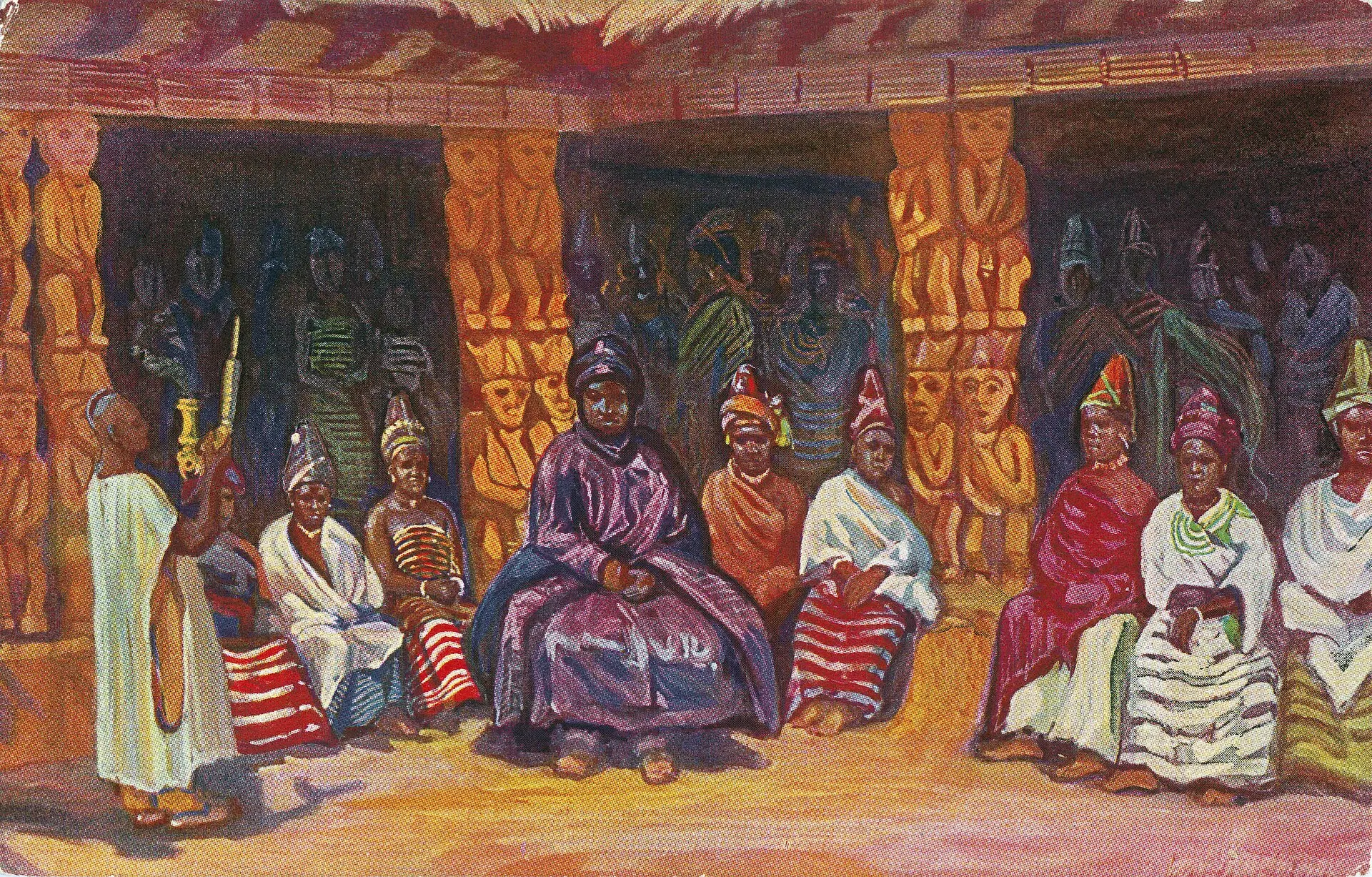
Cameroon is often described as a crossroads of Africa: Bantu-speaking peoples are thought to have begun their great expansion from the region of the present Cameroon–Nigeria borderlands thousands of years ago, and the forests of the south were home to the ancestors of today's Baka and Bagyeli forest peoples. Around Lake Chad, the Sao culture flourished from roughly the first millennium AD, leaving terracotta figures and walled towns; in the Mandara Mountains, the dry-stone Diy-Gid-Biy sites, probably from the 12th–17th centuries, are now a UNESCO World Heritage cultural landscape.
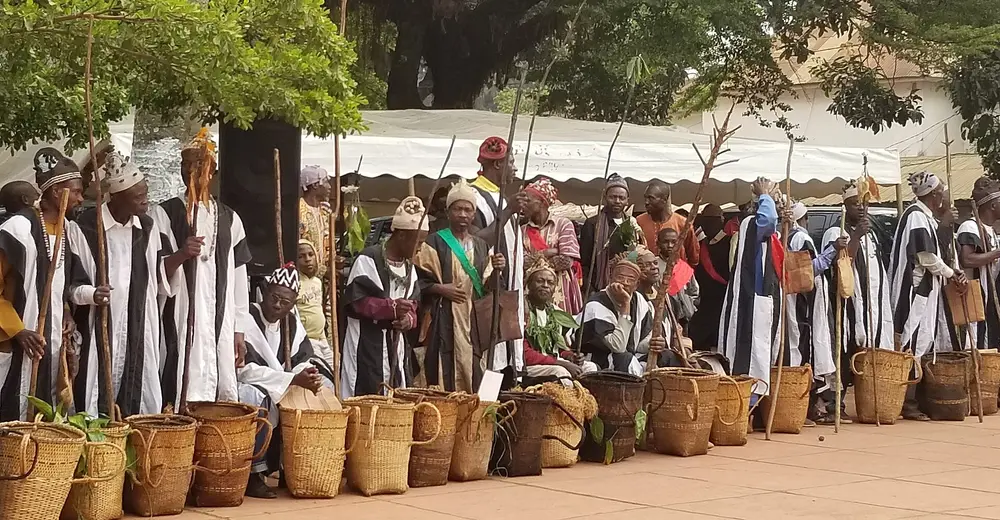
In the western grasslands, centralised kingdoms developed. The Bamoun dynasty traces its origin to Nchare Yen around 1394; the Bamileke organised themselves into dozens of chiefdoms, each led by a fon with secret societies and elaborate court arts. On the coast, the Duala controlled trade on the Wouri, and in the 19th century the Fulani jihad of Usman dan Fodio led to the creation of lamidates (emirates) in the north, such as Ngaoundéré, Garoua and Maroua.
Prawns, trade and slavery
Portuguese navigators led by Fernão do Pó reached the Wouri estuary in the 1470s and named it Rio dos Camarões, the River of Prawns — the origin of the country's name in every language. For the following centuries, the coast was drawn into the Atlantic trade: enslaved people were shipped from sites such as Bimbia, near Limbe, where the remains of the slave-trading post are now a site of memory. In the 19th century, British missionaries and traders were active — the Baptist missionary Alfred Saker founded Victoria (today's Limbe) in 1858.
German Kamerun (1884–1916)
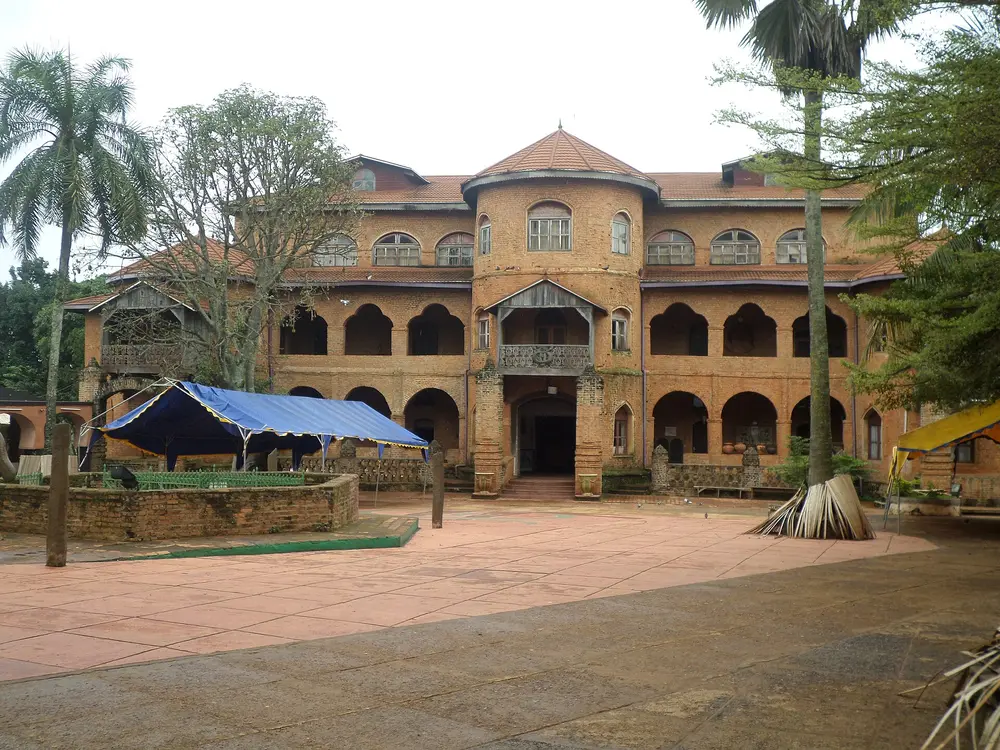
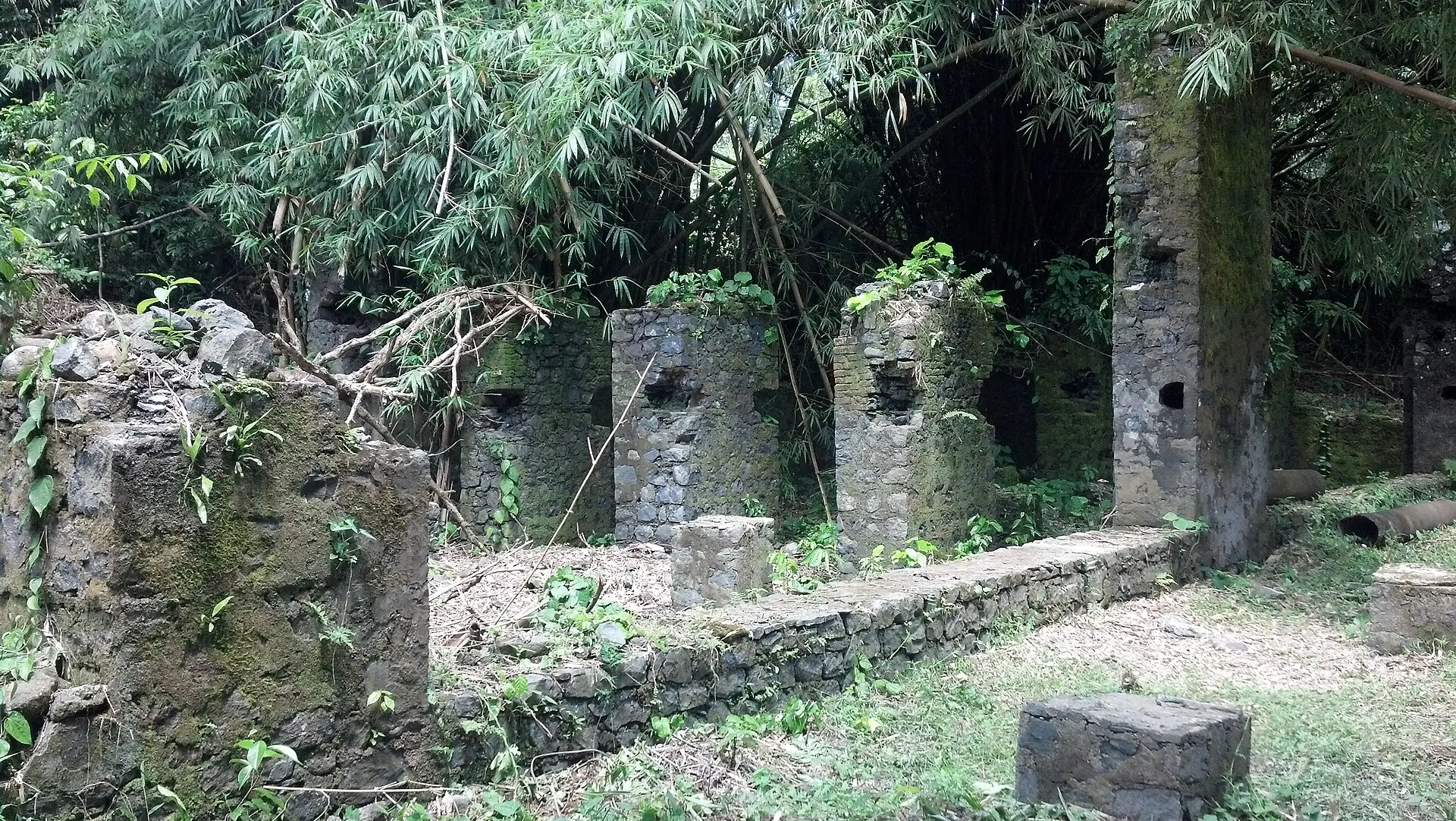
In July 1884 the Duala kings signed a treaty with Germany, and 'Kamerun' became a German protectorate. The Germans built plantations on the slopes of Mount Cameroon, the first railways and the bridge over the Sanaga at Edéa, and pushed inland by military campaigns. Resistance was fierce: in 1914 the Duala king Rudolf Duala Manga Bell, who opposed land expropriation in Douala, was hanged by the colonial authorities — he is today a national hero. Sultan Njoya of the Bamoun, by contrast, navigated the German period with diplomacy while modernising his kingdom: he created the Bamoun script (later called A-ka-u-ku), schools and a palace inspired by German architecture.
The Duala kings and the 1884 treaty
The German protectorate began with a treaty signed in Douala on 12 July 1884 between the German representatives and the Duala rulers King Ndumbe Lobe Bell and King Akwa, who sought to secure their trading position. The Duala soon found the colonial power taking more than trade: the plan to expropriate their land on the Joss plateau (today's Bonanjo) led to the protest of Rudolf Duala Manga Bell and his execution in 1914. The Pagode in Bonanjo, built for the Bell family in 1905, and the monuments in Bonanjo and Akwa keep this history visible.
French and British Cameroons (1916–1960)
During the First World War, British and French forces conquered Kamerun. The territory was divided: about four-fifths went to France and two strips along the Nigerian border to Britain, under League of Nations mandates and later UN trusteeship. French Cameroun was administered from Yaoundé and Douala; British Cameroons was run as part of Nigeria.
After 1945, nationalism grew. The Union des Populations du Cameroun (UPC), led by Ruben Um Nyobè, campaigned for independence and reunification; banned in 1955, it took up arms, and a brutal war against the UPC continued in the south and west into the 1960s. Um Nyobè was killed in 1958 and Félix-Roland Moumié was assassinated in Geneva in 1960.
Independence and reunification
- 1 January 1960
Independence of French Cameroun
Ahmadou Ahidjo becomes the first president of the Republic of Cameroon.
- 11 February 1961
UN plebiscite in British Cameroons
Southern Cameroons votes to join Cameroon; Northern Cameroons joins Nigeria. 11 February is now Youth Day.
- 1 October 1961
Federal Republic
East (French-speaking) and West (English-speaking) Cameroon form a federation, symbolised by Yaoundé's Reunification Monument.
- 20 May 1972
Unitary state
A referendum ends the federation; 20 May becomes National Day.
- 1982
Paul Biya becomes president
Ahidjo resigns; his prime minister Paul Biya succeeds him and remains in office through multiple elections.
- 1990s
Multiparty politics
Opposition parties are legalised in 1990; contested elections follow.
- 2008
Bakassi handover
Nigeria completes the transfer of the Bakassi peninsula to Cameroon after an International Court of Justice ruling (2002).
- 2014 onward
Boko Haram in the Far North
Attacks spread from Nigeria, ending tourism in the Far North.
- 2016 onward
Anglophone crisis
Protests in the North-West and South-West escalate into armed conflict.
- October 2025
Presidential election
Paul Biya is declared re-elected for another term amid disputed results and protests.
Key dates
| Year | Event |
|---|---|
| c. 1394 | Foundation of the Bamoun kingdom by Nchare Yen (dynastic tradition) |
| 1472 | Portuguese navigators reach the Wouri estuary: Rio dos Camarões |
| 1858 | Alfred Saker founds Victoria (Limbe) |
| 1884 | Treaty with the Duala kings; German protectorate of Kamerun |
| c. 1896 | Sultan Njoya creates the Bamoun script |
| 1914 | Execution of Rudolf Duala Manga Bell |
| 1916 | Allied conquest; Kamerun divided between France and Britain |
| 1960 | Independence of French Cameroun (1 January) |
| 1961 | Plebiscite (11 February); Federal Republic (1 October) |
| 1972 | Referendum creates the unitary state (20 May, National Day) |
| 1982 | Paul Biya becomes president |
| 2017 | Escalation of the crisis in the Anglophone regions |
Cameroon today
With roughly 29–30 million people, Cameroon is one of Central Africa's largest economies, built on oil, gas, timber, cocoa, coffee, cotton and the ports of Douala and Kribi. It is a member of the CEMAC monetary union (CFA franc), the African Union and both the Commonwealth (since 1995) and La Francophonie. Its football — the 'Indomitable Lions', five-time Africa Cup of Nations champions — and its music, from makossa (Manu Dibango's 'Soul Makossa', 1972) to bikutsi, are known far beyond its borders.
The conflicts in the Anglophone regions and the Far North, and questions over political succession, dominate the news. For visitors, the practical consequence is the travel advice summarised in our safety briefing.
Why history matters on your trip
Cameroon's past explains much of what you'll see: why Douala's old quarter has German-era buildings and a royal pagoda, why the country is officially bilingual, why the Bamoun palace is a living institution, and why the Anglophone regions are under travel advice today. A guide at the National Museum in Yaoundé, the Museum of the Bamoun Kings in Foumban or the Musée des Civilisations in Dschang can bring these threads together — and newly listed museum and city tours in Yaoundé offer another way in.
Yaoundé museum tour
A guided museum tour in Yaoundé focused on the stories behind the collections. Newly listed on GetYourGuide with no reviews yet (November 2026) — check the itinerary and inclusions on the listing.
Check availabilityBook via GetYourGuideTour listings are on GetYourGuide. Prices, times and cancellation terms are shown live on each listing and can change; VisitCameroon.com may earn a commission at no extra cost to you.
History you can visit
- Foumban: Sultan's Palace and Museum of the Bamoun Kings — the Bamoun dynasty and Njoya's script. Guide.
- Douala: the Pagode of the Bell kings and the Duala Manga Bell monument. Guide.
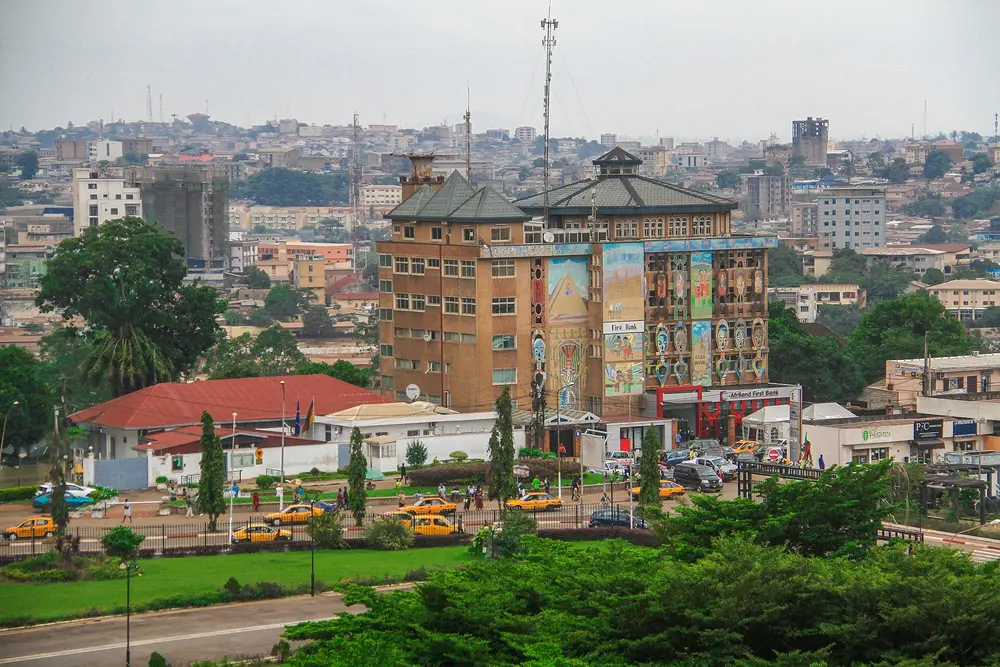
- Yaoundé: the Reunification Monument and the National Museum. Guide.
- Bandjoun and Batoufam: Bamileke chiefdoms and their museums. Guide.
- Edéa: the German-era bridge over the Sanaga.
- Bimbia (near Limbe) and the Diy-Gid-Biy sites (Far North): important, but under travel advice today.
Frequently asked questions
Why is Cameroon called Cameroon?
From the Portuguese Rio dos Camarões, 'river of prawns', the name 15th-century sailors gave to the Wouri estuary at Douala.
Why does Cameroon speak French and English?
After the First World War the German colony was divided between France and Britain. French Cameroun became independent in 1960 and part of British Cameroons joined it in 1961, creating a bilingual federation.
Who was Sultan Njoya?
Ibrahim Njoya (reigned c. 1886–1933) was the Bamoun king who invented a writing system for his language, built the palace of Foumban and promoted arts and learning.
When did Cameroon become independent?
French Cameroun became independent on 1 January 1960; the British Southern Cameroons joined on 1 October 1961.
Who colonised Cameroon?
Germany (1884–1916), then France and Britain, which divided the territory under League of Nations mandates and later UN trusteeship until independence in 1960–61.
What happened in Cameroon in 1961?
After a UN-organised plebiscite on 11 February 1961, the southern part of British Cameroons joined the Republic of Cameroon, forming a federal republic on 1 October 1961; the northern part joined Nigeria.
When did the German period begin in Cameroon?
With the treaty of 12 July 1884 between German representatives and the Duala kings Bell and Akwa.
Sources and official information
Facts were checked against these official and primary sources in November 2026. Security advice, visa rules, prices and timetables change, so confirm before you go.
VisitCameroon.com is an independent guide, not the official site of the Ministry of Tourism and Leisure (MINTOUL), the Government of Cameroon or any operator. Some links are affiliate links: hotels go to Booking.com and tours to GetYourGuide, and we may earn a commission at no extra cost to you.